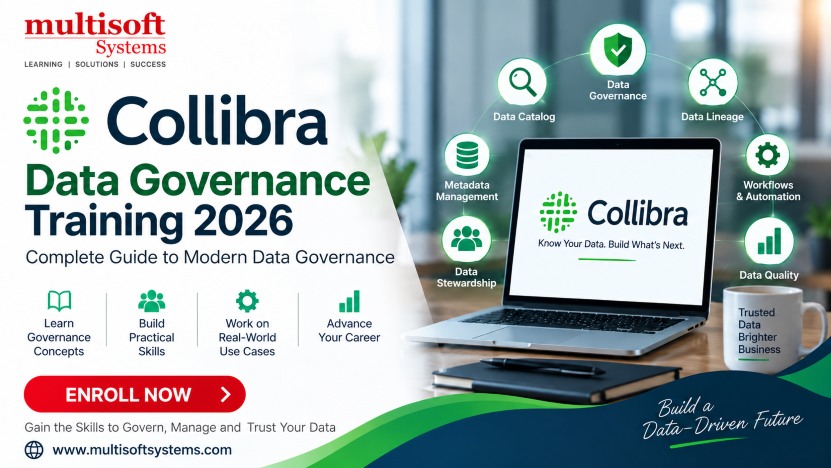
Data has become one of the most valuable resources for modern organizations. Businesses use data for reporting, customer insights, financial planning, risk management, artificial intelligence and daily decision-making. However, data can only create value when people can find it, understand it, trust it and use it responsibly. As data environments become larger and more complex, organizations need structured approaches to data governance. This is where Collibra Data Governance Training can help professionals develop practical knowledge of data governance frameworks, metadata, stewardship, policies, workflows, data quality and governance technology. Collibra provides a platform designed to help organizations govern data and AI, create shared business context, automate governance processes and improve visibility across data environments. Its current platform direction also emphasizes trusted and AI-ready data, making governance increasingly important as organizations adopt generative AI and other data-driven technologies.
The Collibra Data Governance Training program from Multisoft Systems combines data governance fundamentals with practical Collibra concepts, integrations, infrastructure, workflows and hands-on use cases. The course is designed for professionals who want to understand both the business and technical sides of enterprise data governance.
What Is Data Governance?
Data governance is a structured approach to managing an organization’s data through defined policies, processes, roles and responsibilities. It helps ensure that data remains accurate, consistent, secure, accessible and trustworthy throughout its lifecycle. Effective data governance establishes clear ownership, defines how data should be created and used and provides standards for managing data quality and compliance. It also helps organizations understand where their data comes from, who is responsible for it and how it can be used for business decisions. With proper governance practices, businesses can improve data management, reduce risks and create a stronger foundation for analytics, reporting and AI initiatives.
Why Is Collibra Data Governance Important?
The growth of cloud platforms, analytics systems, data warehouses and AI applications has made data environments more complicated. Different departments may use different systems and definitions for the same business information. Collibra Data Governance provides a structured environment for bringing governance processes together. Its capabilities include centralized policies, governance workflows, business terminology, data context and stewardship processes.
For organizations, this can support several important objectives:
- Establishing a common understanding of data
- Improving data discovery
- Defining ownership and accountability
- Supporting data quality initiatives
- Managing governance policies
- Improving regulatory readiness
- Supporting collaboration between technical and business teams
- Creating trusted data for analytics and AI
The goal is not simply to document data. Good governance connects data with business meaning, responsibility and appropriate usage.
What Is Collibra?
Collibra is a data and AI governance platform that helps organizations discover, understand, govern and use data with greater confidence. The current Collibra Platform connects governance capabilities across data and AI environments and supports activities such as cataloging, assessment, monitoring, data access and governance workflows. Collibra Data Governance specifically focuses on operationalizing governance strategies through centralized policies and automated workflows. It can provide a shared location for business terminology, data context and governance information. This makes Collibra relevant to organizations that want to move from informal data management toward a structured enterprise-wide governance model.
What Can You Learn in Collibra Data Governance Training?
The Multisoft Systems program is designed around both data governance concepts and practical Collibra capabilities. The curriculum covers nine major modules, starting with data management fundamentals and progressing toward Collibra implementation, integration, infrastructure, workflows and practical use cases.
1. Data Management and Governance Fundamentals
The first module introduces data management and governance concepts. Learners explore the data lifecycle, the difference between data management and data governance and the importance of governance in modern organizations. The module also examines problems organizations can face without effective governance and how governance practices can address those problems. This foundation is important because Collibra is not simply a software tool. Successful governance requires an understanding of business processes, people, policies and technology.
2. Data Governance Framework
The next stage focuses on building a governance framework. The course covers the major governance pillars of people, process, technology and governance.
Participants also explore:
- Data governance strategy
- Policies and procedures
- Governance organizations
- Data stewardship
- Roles and responsibilities
- Stewardship operating models
These concepts help learners understand how governance programs are organized and operationalized within an enterprise.
Metadata Management and Business Glossary
Metadata provides information about data and helps people understand what a data asset represents, where it comes from and how it can be used. The training covers metadata management along with business glossaries and data dictionaries. These components are important for creating consistent definitions across departments. For example, different teams may interpret the term "customer" differently. A business glossary can help establish an approved definition so that business and technical teams work with the same terminology. Collibra's current governance capabilities similarly focus on creating a shared language around business terms, rules and metrics.
Data Classification and Data Quality
Data classification helps organizations organize data according to defined categories, standards or sensitivity levels. The training covers classification rules, regulations, standards and the benefits of proper classification. Data quality is another important governance area. Poor-quality data can affect reports, analytics, operational decisions and AI systems. The course introduces data quality dimensions, rules and metrics. This gives learners a foundation for understanding how organizations can identify and measure data quality issues. A governance program becomes more effective when it combines ownership and policy with measurable data quality practices.
Understanding Collibra Data Governance Capabilities
The Collibra-focused section of the training introduces the platform and its governance capabilities. Learners explore Collibra concepts such as Data Governance Center, Catalog, Policy Manager and Helpdesk. The course also covers the metamodel structure and hierarchy, communities, domains, templates, assets, attributes, relations and roles.
Understanding these elements helps learners see how governance information can be organized inside Collibra.
Communities and Domains
Communities and domains provide ways to structure governance content within Collibra. Organizations can use these structures to represent business areas, governance responsibilities or other organizational requirements. Understanding how these components relate to each other is important for designing a practical governance environment.
Assets, Attributes and Relations
Assets represent governed objects within the Collibra environment. Attributes provide additional information about those objects, while relations connect assets to one another. Learning how these components work together helps professionals understand how business and technical information can be represented within a governance platform.
Collibra Integration
Enterprise data rarely exists in one application. Organizations commonly work with databases, cloud platforms, data warehouses, analytics systems and other technologies. The Multisoft Systems curriculum therefore includes integration concepts, APIs, REST APIs, Collibra API, MySQL integration, AWS integration using Collibra Catalog and Snowflake integration. Integration knowledge is important because governance becomes more useful when it can connect with the systems where organizational data actually exists. Collibra also emphasizes broad connectivity across data ecosystems, with its current platform supporting connections to diverse data sources across hybrid cloud environments.
Collibra Infrastructure: Cloud and On-Premises
Infrastructure knowledge is another part of the training. Learners explore Collibra on-premises and cloud environments, their differences, benefits and installation considerations. Understanding infrastructure options helps professionals think about governance technology in the context of an organization's existing IT environment. Cloud adoption has changed how organizations deploy and manage enterprise applications. At the same time, some businesses continue to operate hybrid or on-premises environments because of security, regulatory, integration or operational requirements. A governance professional therefore benefits from understanding how platform architecture relates to organizational needs.
Data Lineage in Collibra
Data lineage explains how data moves from one point to another. It can help users understand where information originated, how it was transformed and where it is ultimately consumed. The training covers lineage in Collibra, enterprise-level benefits, lineage usage and custom lineage views. Lineage is especially useful when investigating reporting discrepancies, understanding dependencies or assessing the potential impact of changes. For example, if a source field changes, lineage information can help identify downstream reports or data processes that may be affected. Collibra's current platform also emphasizes lineage as part of helping users understand where data comes from and how it flows across environments.
Collibra Workflows and Automation
Governance involves many repetitive activities such as approvals, reviews, ownership assignments and policy-related processes. Manually managing these activities can become difficult as an organization grows. Collibra supports workflow-based governance, and the Multisoft Systems training covers automated workflows, out-of-the-box workflows and customized BPMN workflows. Workflow automation can help organizations create consistent processes for governance activities.
For example, an organization may establish a workflow for creating a new business term:
Request → Review → Approval → Publication → Governance
A structured workflow can make responsibilities clearer and reduce the risk of important governance tasks being missed.
Collibra Console and Administration
The course also introduces Collibra Console, including nodes, logs and backup settings. Learners explore how the console can support platform administration and operational activities. Administrative knowledge is useful for professionals who may be involved in maintaining the Collibra environment rather than only consuming governance information. Understanding logs and operational settings can also help when troubleshooting platform-related issues.
Hands-On Collibra Use Cases
Theory is important, but practical application is essential for learning enterprise data governance. The Multisoft Systems course includes several Collibra use cases and hands-on exercises. Participants are also given an assignment as part of the practical learning process. Hands-on activities can help learners understand how governance concepts translate into real organizational scenarios.
Practical learning can strengthen skills in areas such as:
- Creating governance structures
- Managing assets
- Working with metadata
- Defining roles
- Building workflows
- Understanding lineage
- Connecting data sources
- Applying governance policies
- Solving governance-related scenarios
- Collibra and AI Governance
Data governance has become even more important with the growth of artificial intelligence. AI systems depend on data and context. If the underlying data is poorly understood, inconsistent or insufficiently governed, organizations may face greater risks when deploying AI applications. Collibra's current platform describes itself as an enterprise AI control plane and focuses on governing data and AI across organizations. Its platform supports capabilities for observing, tracking, protecting and democratizing data and AI. This means that data governance professionals increasingly need to understand how governance principles apply to AI-related data and use cases.
Collibra Data Products and Trusted Data
Another current development is the growing focus on data products. Collibra's Data Products framework is designed to support the governance, sharing and operationalization of data, combining physical data with business context and reliability standards. This reflects a broader shift in data management. Organizations are increasingly looking at data as reusable products that need clear ownership, quality expectations, context and governance. Professionals who understand traditional governance concepts alongside data products can be better positioned to support modern data programs.
Who Should Learn Collibra Data Governance?
The Multisoft Systems course is designed for professionals involved in data governance and enterprise data management. Its target audience includes data stewards, data analysts, data governance managers, IT professionals, compliance officers, business analysts, data architects, enterprise data managers, project managers and data scientists. The training can be particularly useful for professionals who want to understand the relationship between business data, governance processes and technology.
Prerequisites for Collibra Training
According to the Multisoft Systems course page, learners should have a basic understanding of data governance principles and familiarity with data management and workflows. Professionals with experience in data analytics, enterprise data management, compliance or IT may find these concepts easier to connect with their existing responsibilities. However, a structured training program can also help learners build the required foundation before moving into advanced Collibra concepts.
Career Opportunities After Collibra Data Governance Training
Data governance is relevant across many industries because organizations need reliable and controlled data for business operations, analytics and compliance.
Potential career paths include:
- Data Governance Specialist
- Data Steward
- Data Governance Manager
- Collibra Consultant
- Data Management Consultant
- Metadata Analyst
- Data Quality Analyst
- Data Architect
- Data Governance Analyst
- Enterprise Data Manager
- Data Management Specialist
- Business Data Analyst
- Information Governance Professional
Career growth depends on professional experience, technical skills, domain knowledge and the requirements of individual employers.
Why Hands-On Collibra Training Matters
Collibra is an enterprise platform with multiple concepts and configuration areas. Reading about data governance can provide theoretical understanding, but practical exercises can make those concepts easier to apply. Hands-on training gives learners an opportunity to work through governance structures, assets, relationships, workflows, lineage, integrations and use cases. Multisoft Systems describes its Collibra program as instructor-led and project-based, with hands-on exercises and real-world case studies. This type of learning can help participants build confidence before working on enterprise governance initiatives.
Why Choose Multisoft Systems for Collibra Data Governance Training?
- Instructor-led online training
- Project-based learning approach
- Experienced trainers
- Hands-on practical exercises
- Real-world case studies
- Customized learning schedules
- Doubt-clearing sessions
- Practical Collibra use cases
- Course completion certificate
- Training covering governance and Collibra platform concepts
- Integration and workflow-focused learning
- After-training support
Collibra Training Assessment
Assessment can help learners evaluate their understanding of the training material. Multisoft Systems describes an assessment that includes multiple-choice questions and short answers, along with analytical thinking, problem-solving and communication skills. The assessment platform includes secure login, automated scoring and time limits. Such assessments can help learners identify areas that require additional revision before applying their knowledge in professional projects.
The Future of Data Governance
Data governance is moving beyond traditional cataloging and documentation. Organizations increasingly need governance that supports analytics, cloud data platforms, data products and AI. Collibra's current platform direction reflects this change by bringing together data governance, data quality, lineage, privacy and AI governance capabilities. At the same time, AI is increasing the importance of trusted business context. Organizations need to know whether the data used by people, analytics systems and AI applications is reliable and appropriately governed. For data professionals, this creates an opportunity to expand from traditional data management into broader governance, data intelligence and AI governance responsibilities.
Conclusion
Collibra Data Governance Training can help professionals develop practical skills for managing, governing and improving enterprise data. From data governance frameworks, metadata and business glossaries to data quality, lineage, workflows and integrations, the training provides knowledge relevant to modern data environments. As organizations increasingly adopt cloud platforms, analytics and AI, trusted and well-governed data is becoming more important.
Multisoft Systems offers instructor-led training with hands-on exercises, project-based learning and experienced trainers to support practical understanding. If you want to strengthen your data governance skills and explore new career opportunities, Enroll in Collibra Data Governance Training at Multisoft Systems now!