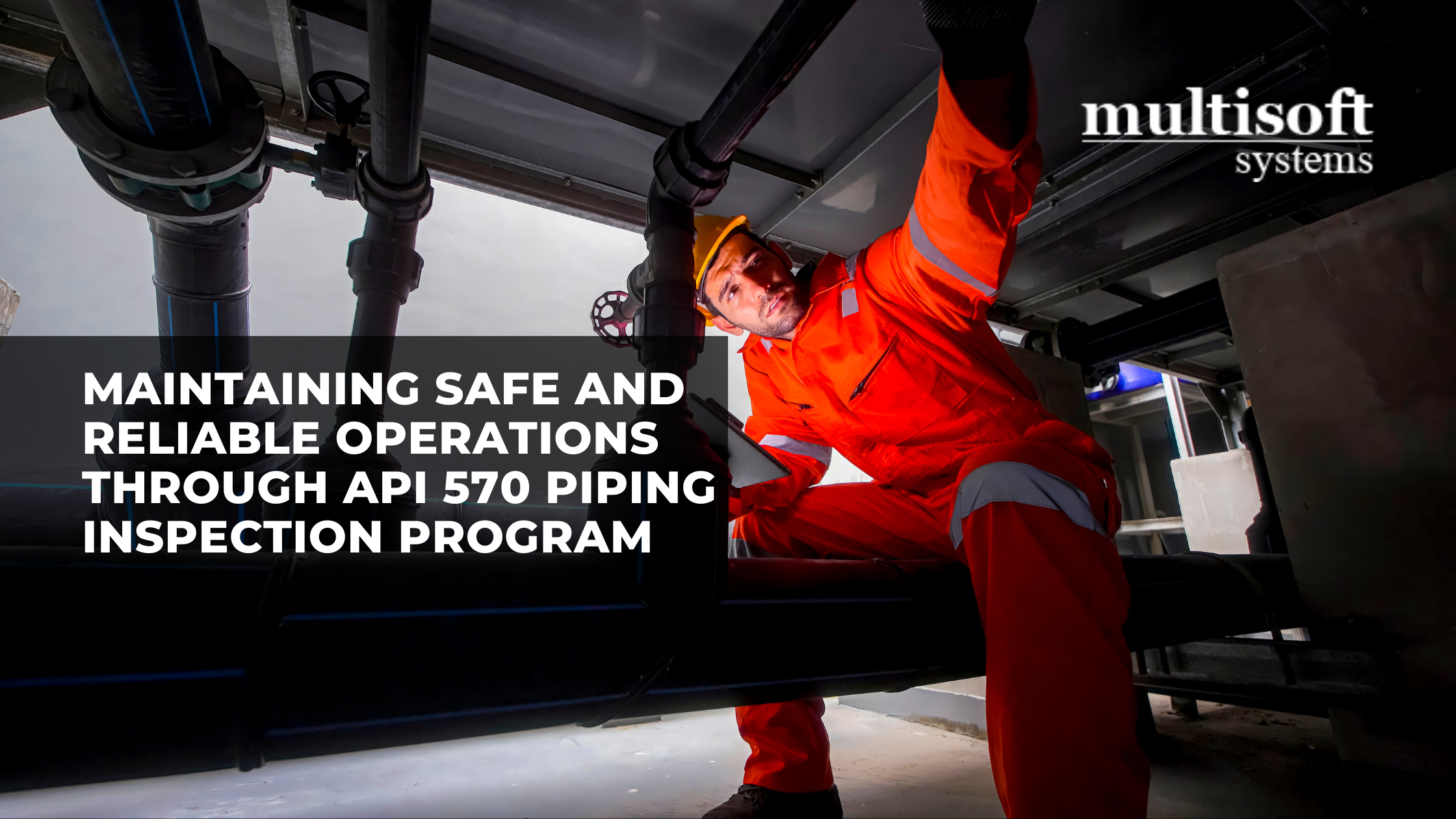
API 570, titled Inspection, Repair, Alteration, and Rerating of In-Service Piping Systems, is a globally recognized standard developed by the American Petroleum Institute (API). It provides comprehensive requirements for maintaining the integrity and reliability of piping systems used in industries such as oil and gas, petrochemical, chemical processing, power generation, and refining. These piping systems transport critical fluids, including hydrocarbons, steam, chemicals, and gases, often under high pressure and temperature conditions.
Over time, piping systems are exposed to degradation mechanisms such as corrosion, erosion, fatigue, and cracking. Without proper inspection and maintenance, these defects can lead to leaks, failures, safety hazards, environmental damage, and costly downtime. API 570 provides structured guidelines for inspecting piping systems, assessing their condition, determining repair requirements, and ensuring continued safe operation. This article by Multisoft Systems explains the purpose, scope, inspection methods, damage mechanisms, repair practices, and benefits of API 570 online training implementation in modern industrial environments.
What Is API 570?
API 570 is an inspection code that applies specifically to in-service metallic piping systems. It focuses on ensuring the mechanical integrity of piping systems that have already been placed into operation. The standard provides detailed guidance on inspection intervals, inspection methods, repair procedures, and documentation requirements. API 570 complements other standards such as:
- API 510 (Pressure Vessel Inspection Code)
- API 653 (Storage Tank Inspection Code)
- ASME B31.3 (Process Piping Code)
While ASME B31.3 governs piping design and construction, API 570 focuses on inspection and maintenance during operation. The main objective of API 570 training is to ensure that piping systems remain safe, reliable, and fit for continued service.
Scope of API 570
The scope of API 570 covers the inspection, repair, alteration, and rerating of in-service metallic piping systems used in industries such as oil and gas, petrochemical, chemical processing, and power generation. It applies specifically to piping systems that transport fluids including hydrocarbons, steam, chemicals, and gases under various pressure and temperature conditions. The standard focuses on ensuring the mechanical integrity, safety, and reliability of piping systems that are already in operation, helping organizations detect damage mechanisms such as corrosion, erosion, fatigue, and cracking before they lead to failures. API 570 provides requirements for inspection intervals, inspection methods, thickness monitoring, corrosion rate assessment, and proper documentation. It also defines responsibilities for inspectors, engineers, and maintenance personnel to ensure piping systems remain fit for continued service. The standard applies to metallic piping constructed according to recognized codes such as ASME B31.3 and similar standards. However, it does not apply to new piping systems under construction or non-metallic piping. By implementing API 570, organizations can maintain safe operations, extend piping service life, prevent leaks or failures, and ensure compliance with industry regulations and safety requirements.
However, API 570 does not apply to:
- Non-metallic piping systems (covered under other standards)
- Piping systems in new construction (covered under ASME B31.3)
- Pipelines covered under API 1160 or ASME B31.4/B31.8
Importance of API 570 in Industrial Operations
API 570 plays a vital role in ensuring the safety, reliability, and integrity of piping systems used in industrial operations such as refineries, petrochemical plants, power plants, and chemical processing facilities. Piping systems are responsible for transporting critical fluids under high pressure and temperature, and any failure can lead to serious safety hazards, environmental damage, and costly production downtime. API 570 provides structured guidelines for regular inspection, condition monitoring, repair, and maintenance, helping organizations detect corrosion, erosion, cracks, and other damage mechanisms at an early stage. By identifying potential issues before they escalate into failures, industries can prevent leaks, explosions, and unplanned shutdowns. The standard also helps extend the service life of piping systems by ensuring timely maintenance and proper repair procedures. Additionally, API 570 training certification supports regulatory compliance and improves overall asset integrity management. It enables organizations to implement risk-based inspection strategies, optimize maintenance costs, and ensure continuous and safe operation of piping systems, making it an essential component of modern industrial safety and reliability programs.
Types of Inspection in API 570
API 570 defines different types of inspections depending on piping condition, service, and criticality.
1. External Inspection
External inspection involves examining the outside surface of piping systems to identify visible signs of deterioration, damage, or abnormal conditions that may affect mechanical integrity. This inspection is typically performed while the piping system is in operation and focuses on detecting external corrosion, leaks, cracks, coating damage, and corrosion under insulation (CUI). Inspectors also evaluate pipe supports, hangers, clamps, and structural components to ensure proper alignment and load distribution. External inspection helps identify environmental effects such as weather exposure, vibration, and mechanical impact. Visual inspection is the primary method, but additional tools like thermal imaging may be used. Regular external inspection allows early detection of problems, enabling timely maintenance and preventing failures that could lead to safety hazards or operational disruptions.
2. On-Stream Inspection
On-stream inspection is conducted while the piping system remains in service and operational. This inspection focuses on monitoring the condition of piping without interrupting production, making it highly valuable for continuous operations. Inspectors use nondestructive testing methods such as ultrasonic thickness measurement, radiography, and visual inspection to assess corrosion, erosion, and wall thinning. On-stream inspection helps determine corrosion rates and evaluate the remaining strength and life of piping components. It also identifies leaks, hot spots, vibration damage, and abnormal operating conditions. This inspection allows organizations to detect deterioration early and take preventive action before serious damage occurs. On-stream inspection supports safe and efficient plant operation by reducing the need for shutdowns while ensuring piping integrity.
3. Internal Inspection
Internal inspection involves examining the inner surface of piping systems to identify damage mechanisms that cannot be detected externally. This inspection is usually performed during plant shutdowns or maintenance when piping systems are opened for direct access. Inspectors check for internal corrosion, erosion, scaling, deposits, cracking, and material degradation caused by the transported fluid. Internal inspection provides accurate information about the actual condition of the piping and helps assess remaining wall thickness and structural integrity. It also helps evaluate the effectiveness of corrosion control methods such as coatings and chemical treatments. Internal inspection is critical for detecting hidden damage that may lead to sudden failures. This inspection ensures piping systems remain safe and reliable for continued service.
4. Thickness Measurement Inspection
Thickness measurement inspection focuses on determining the remaining wall thickness of piping systems to assess corrosion and erosion damage. This inspection is essential for evaluating piping strength and predicting remaining service life. Ultrasonic testing (UT) is the most commonly used method, as it provides accurate thickness readings without damaging the piping. Radiographic testing may also be used in certain applications. Inspectors measure thickness at selected points known as corrosion monitoring locations (CMLs) to track material loss over time. By comparing current measurements with previous records, corrosion rates can be calculated, helping engineers plan maintenance or replacement. Thickness measurement inspection ensures piping operates within safe limits and helps prevent unexpected failures and costly downtime.
Damage Mechanisms in Piping Systems
API 570 addresses various damage mechanisms that affect piping integrity.
1. Corrosion
Corrosion is the most common damage mechanism in piping systems. Types include:
- General corrosion
- Localized corrosion
- Pitting corrosion
- Galvanic corrosion
Corrosion reduces pipe wall thickness and weakens structural integrity.
2. Erosion and Erosion-Corrosion
Erosion occurs due to high-velocity fluid flow carrying particles. This causes:
- Material loss
- Wall thinning
- Weakening of piping
Erosion-corrosion is a combination of erosion and corrosion. It accelerates material degradation.
3. Fatigue
- Fatigue occurs due to cyclic loading and pressure fluctuations.
- Repeated stress cycles cause cracks to develop and grow.
- Fatigue failure can occur suddenly without warning.
4. Stress Corrosion Cracking (SCC)
Stress corrosion cracking occurs due to combined effects of:
- Stress
- Corrosive environment
It can cause sudden failure. Common in:
- Stainless steel piping
- Chemical processing environments
5. Thermal Damage
Thermal damage occurs due to high temperature exposure. Examples include:
- Creep
- Thermal fatigue
This weakens piping material.
Inspection Frequency and Intervals
Inspection frequency and intervals under API 570 are determined based on factors such as corrosion rate, service conditions, piping material, operating environment, and the criticality of the piping system. The objective is to ensure that inspections are conducted often enough to detect deterioration before it reaches unsafe levels. External inspections are typically performed at regular intervals, often every five years or less, depending on environmental exposure and risk level. Thickness measurements are scheduled based on calculated corrosion rates to monitor wall thinning and predict remaining service life. Internal inspections may be required when there is a higher risk of internal corrosion or when external inspection is insufficient to assess the piping condition. API 570 also allows the use of Risk-Based Inspection (RBI) to optimize inspection intervals by focusing on piping systems with higher probability and consequence of failure. Properly planned inspection intervals help ensure safe operation, extend equipment life, prevent unexpected failures, and support effective maintenance planning while minimizing operational disruptions and maintenance costs.
Inspector Qualification Requirements
API 570 requires inspections to be performed by qualified inspectors. An API 570 inspector must have:
- Knowledge of piping systems
- Understanding of inspection methods
- Knowledge of corrosion mechanisms
- Certification from API
API 570 certification validates inspector competency.
Repair of Piping Systems
API 570 provides detailed guidelines for piping repair. Repair methods include:
1. Weld Repair
Weld repair is a common method used to restore the integrity of damaged piping systems by removing the defective or weakened portion and welding new material in its place. This method is typically used when corrosion, cracks, or localized damage affect a specific area. Weld repairs must follow approved welding procedures and qualified welder standards to ensure strength and reliability. Proper inspection and nondestructive testing are performed after repair to verify quality. Weld repair helps restore structural strength and ensures safe, continued operation.
2. Pipe Replacement
Pipe replacement is required when the damage is extensive or when the piping wall thickness has reduced below the minimum allowable limit. In this method, the damaged section is completely removed and replaced with new piping that meets design and material specifications. Replacement ensures long-term reliability and eliminates the risk of failure. It is often used when corrosion is widespread or when repair is not practical. Proper installation, alignment, and inspection ensure safe and efficient operation after replacement.
3. Mechanical Repair
Mechanical repair involves using devices such as clamps, sleeves, or composite wraps to restore the strength of damaged piping without welding. This method is useful when welding is not feasible due to operational or safety constraints. Mechanical repairs can be temporary or permanent, depending on design and application. These solutions help contain leaks, reinforce weakened areas, and maintain system integrity. Proper engineering evaluation ensures the repair can withstand operating pressure and temperature conditions safely.
4. Temporary Repair
Temporary repair is used to control leaks or damage until a permanent repair or replacement can be performed. Common temporary solutions include leak clamps, composite wraps, or patching methods designed to prevent further deterioration. These repairs allow continued operation while minimizing safety risks and downtime. However, temporary repairs must be closely monitored and replaced with permanent solutions as soon as possible. Proper documentation and inspection ensure temporary repairs remain safe during their service period.
Benefits of API 570 Implementation
Organizations implementing API 570 benefit from:
- Regular inspection prevents failures.
- Ensures continuous operation.
- Detects damage early.
- Prevents major repairs.
- Meets industry requirements.
- Enhances overall plant performance.
Future of Piping Inspection
The future of piping inspection is being transformed by advanced technologies that improve accuracy, efficiency, and safety. Digital inspection tools, sensors, and real-time monitoring systems allow continuous assessment of piping conditions without frequent shutdowns. Artificial intelligence and predictive analytics help identify corrosion trends and predict failures before they occur. Drones and robotic inspection devices enable safe inspection of hard-to-reach or hazardous areas. Advanced nondestructive testing methods provide more precise defect detection and evaluation. Integration with asset integrity management systems improves decision-making and maintenance planning. These innovations enhance reliability, reduce operational risks, lower maintenance costs, and ensure safer and more efficient industrial piping system management.
Conclusion
API 570 is a critical standard for ensuring the safety, reliability, and integrity of piping systems in industrial facilities. It provides comprehensive guidelines for inspection, repair, alteration, and maintenance of in-service piping systems. By implementing API 570 inspection programs, industries can detect damage early, prevent failures, reduce downtime, and extend equipment life. API 570 not only improves plant safety but also enhances operational efficiency and regulatory compliance. With increasing focus on asset integrity and safety, API 570 continues to play a vital role in modern industrial operations.
Professionals trained in API 570 inspection are highly valued across industries, making it an essential standard for both organizations and inspection professionals. Enroll in Multisoft Systems now!