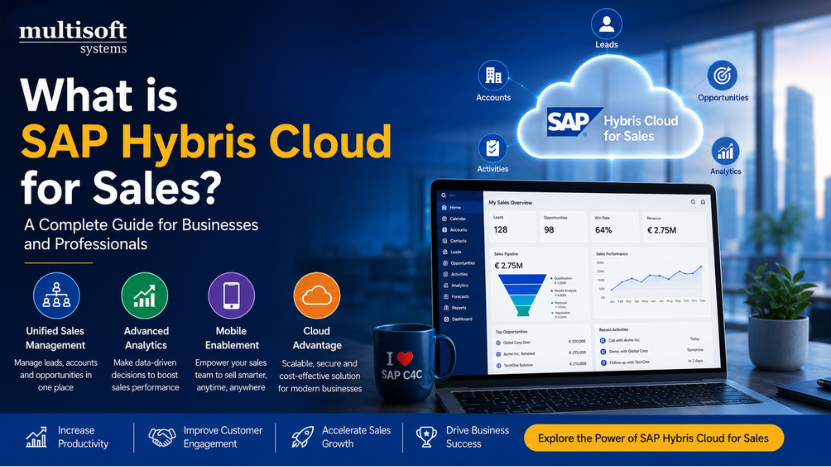
Customer expectations are evolving rapidly, and businesses must adopt intelligent technologies to stay ahead in an increasingly competitive marketplace. Modern customers expect personalized interactions, faster responses, and seamless communication across every touchpoint. To meet these expectations while maintaining efficient sales operations, organizations need a robust Customer Relationship Management (CRM) solution. SAP Hybris Cloud for Sales is a comprehensive cloud-based CRM platform developed to help businesses manage customer relationships, automate sales processes, and improve overall sales performance. SAP Hybris Cloud for Sales provides a centralized environment where sales teams can efficiently manage leads, customer accounts, contacts, opportunities, quotations, activities, and sales forecasts. By offering real-time access to customer information, mobile capabilities, workflow automation, and advanced analytics, the platform enables sales representatives to make data-driven decisions and close deals more effectively. It also integrates seamlessly with SAP ERP, SAP S/4HANA, SAP Commerce Cloud, and various third-party applications, ensuring consistent and accurate business data across the organization.
Beyond sales automation, SAP Hybris Cloud for Sales empowers organizations to build stronger customer relationships through personalized engagement and proactive decision-making. Its intelligent features improve collaboration between sales teams, managers, and customer service departments while increasing visibility into every stage of the sales cycle. This guide explores the platform in detail, covering its architecture, key features, implementation process, business benefits, integrations, best practices, common challenges, career opportunities, and future trends. Whether you are a business decision-maker, CRM consultant, SAP professional, or aspiring learner, this article will help you understand how SAP Hybris Cloud for Sales drives business growth and supports successful digital transformation initiatives.
What is SAP Hybris Cloud for Sales?
SAP Hybris Cloud for Sales is a cloud-based Customer Relationship Management (CRM) solution developed by SAP to help organizations manage and optimize their sales processes while building stronger customer relationships. It provides a centralized platform for managing leads, customer accounts, contacts, opportunities, quotations, sales activities, and forecasts throughout the entire sales lifecycle. By automating routine sales tasks and offering real-time access to customer information, the solution enables sales teams to improve productivity, make informed decisions, and deliver personalized customer experiences. SAP Hybris Cloud for Sales also offers mobile access, advanced analytics, workflow automation, and seamless integration with SAP ERP, SAP S/4HANA, SAP Commerce Cloud, and other enterprise applications, ensuring consistent business data across the organization. Originally introduced under the SAP Hybris brand, the solution later evolved into SAP Sales Cloud as part of SAP's Customer Experience (CX) portfolio. Today, it continues to help businesses streamline sales operations, improve collaboration, accelerate revenue growth, and support digital transformation initiatives through a secure and scalable cloud-based CRM platform.
Understanding SAP Hybris Cloud for Sales
-
Definition and Core Concept
SAP Hybris Cloud for Sales is a cloud-based Customer Relationship Management (CRM) solution designed to help organizations streamline and automate their sales processes while building stronger customer relationships. It provides a centralized platform where sales teams can manage leads, customer accounts, contacts, opportunities, quotations, activities, and sales forecasts from a single interface. Unlike traditional CRM systems that often require extensive on-premises infrastructure, SAP Hybris Cloud for Sales leverages cloud technology to offer flexibility, scalability, and real-time accessibility. The platform enables sales representatives to access critical customer information anytime and anywhere, improving collaboration, decision-making, and overall sales productivity. Its primary objective is to simplify complex sales operations, provide a complete 360-degree view of customers, and help organizations deliver personalized customer experiences that drive long-term business growth.
-
History and Evolution
SAP introduced SAP Hybris Cloud for Sales as part of its broader customer engagement strategy after acquiring Hybris in 2013. The acquisition strengthened SAP's capabilities in commerce and customer experience management by integrating Hybris' advanced commerce solutions with SAP's enterprise applications. SAP Hybris Cloud for Sales was developed to replace traditional CRM systems with a modern, cloud-first platform that could meet the growing demands of digital businesses. Over the years, SAP continuously enhanced the solution by adding intelligent automation, advanced analytics, mobile accessibility, artificial intelligence, and seamless integration with SAP ERP systems. As customer expectations evolved and cloud adoption accelerated, the platform transformed from a basic sales automation tool into a comprehensive CRM solution capable of supporting complex sales operations across multiple industries.
-
Transition to SAP Sales Cloud
As part of SAP's Customer Experience (CX) portfolio modernization, SAP Hybris Cloud for Sales was rebranded as SAP Sales Cloud. This transition reflected SAP's vision of delivering an integrated suite of customer experience solutions that combine sales, marketing, commerce, and customer service on a unified platform. Although the name changed, the core functionalities remained focused on sales automation, customer relationship management, opportunity tracking, forecasting, and analytics. SAP Sales Cloud introduced additional innovations, including AI-powered recommendations, intelligent forecasting, enhanced mobile capabilities, deeper integration with SAP S/4HANA, and improved user experiences. Organizations already using SAP Hybris Cloud for Sales benefited from a smooth migration path while gaining access to new technologies designed to improve sales effectiveness and customer engagement.
-
Role in Enterprise Digital Transformation
Digital transformation has become a strategic priority for organizations seeking to improve operational efficiency and customer satisfaction. SAP Hybris Cloud for Sales plays a significant role in this transformation by digitizing traditional sales processes and enabling data-driven decision-making. Instead of relying on spreadsheets, manual reporting, or disconnected applications, businesses can manage their complete sales lifecycle through a centralized cloud platform. The solution enhances collaboration between sales, marketing, customer service, and finance departments by ensuring consistent access to real-time customer information. It also supports remote and hybrid work environments through secure mobile access, automated workflows, and cloud-based collaboration. By integrating customer interactions with enterprise systems, organizations can respond more quickly to changing market conditions, improve customer experiences, and accelerate business growth.
-
Cloud-Based CRM Architecture
SAP Hybris Cloud for Sales is built on a secure, scalable, multi-tenant cloud architecture that allows organizations to access CRM capabilities without maintaining complex on-premises infrastructure. The platform stores customer information, sales data, activities, and business processes in a centralized cloud environment that can be accessed through web browsers and mobile devices. Its architecture supports seamless integration with SAP ERP, SAP S/4HANA, SAP Commerce Cloud, Microsoft Outlook, and various third-party applications using APIs and integration services. Built-in security mechanisms, role-based access control, data encryption, and automated backups ensure data protection and regulatory compliance. The cloud architecture also enables automatic software updates, improved system performance, high availability, and easier scalability as business requirements continue to evolve.
-
Business Value of SAP Hybris Cloud for Sales
SAP Hybris Cloud for Sales delivers significant business value by helping organizations improve sales efficiency, strengthen customer relationships, and increase revenue. The platform reduces manual administrative tasks through automation, allowing sales professionals to focus more on customer engagement and business development. Real-time analytics, sales forecasting, and performance dashboards provide managers with valuable insights for making informed strategic decisions. Its centralized customer database improves data accuracy and enables personalized interactions across every stage of the customer journey. Seamless integration with enterprise systems eliminates information silos and creates a unified view of business operations. Furthermore, mobile accessibility empowers field sales teams to update customer information, manage opportunities, and collaborate with colleagues from any location. By combining automation, intelligence, and cloud technology, SAP Hybris Cloud for Sales helps organizations enhance productivity, improve customer satisfaction, optimize sales performance, and achieve sustainable business growth in an increasingly competitive digital marketplace.
-
Key Features of SAP Hybris Cloud for Sales
SAP Hybris Cloud for Sales offers a comprehensive set of features that enable organizations to manage customer relationships, automate sales activities, and improve overall sales performance. The platform centralizes customer data, streamlines sales processes, and provides real-time visibility into every stage of the sales pipeline. With intelligent automation, mobile accessibility, advanced analytics, and seamless integration with enterprise applications, businesses can increase productivity, enhance collaboration, and deliver personalized customer experiences. These features help sales teams make faster decisions, reduce manual work, and achieve higher revenue growth.
Key Features:
- Lead Management
- Opportunity Management
- Account and Contact Management
- Sales Force Automation (SFA)
- Quote and Proposal Management
- Sales Forecasting
- Territory Management
- Pipeline Management
- Activity and Task Management
- Visit Planning for Field Sales
- Mobile CRM with Offline Access
- Workflow Automation
- Real-Time Dashboards and Reporting
- AI-Powered Sales Recommendations
- Customer 360-Degree View
- Calendar and Email Integration
- Document Management
- Role-Based Security
- Customizable Business Processes
- Integration with SAP and Third-Party Applications
Core Components of SAP Hybris Cloud for Sales
- Accounts
- Contacts
- Leads
- Opportunities
- Sales Quotes
- Products
- Price Lists
- Activities
- Tasks
- Appointments
- Customer Visits
- Sales Territories
- Employees
- Organizational Structure
- Business Roles
- Work Centers
- Reports
- Dashboards
- Workflow Engine
- Analytics
- Forecast Management
- Mobile Application
- Integration Services
- Approval Processes
SAP Hybris Cloud for Sales Architecture
SAP Hybris Cloud for Sales is built on a secure, scalable, multi-tenant cloud architecture that enables organizations to access CRM capabilities without maintaining complex on-premises infrastructure. The platform stores customer, sales, and business data in a centralized cloud environment, allowing authorized users to access information from anywhere using web browsers or mobile devices. Its architecture supports seamless integration with SAP ERP, SAP S/4HANA, SAP Commerce Cloud, Microsoft Outlook, and various third-party applications through APIs and integration services. The solution incorporates robust security features such as role-based access control, encryption, authentication, and automated backups to protect business data. Additionally, automatic software updates, high availability, disaster recovery, and cloud scalability ensure optimal system performance while reducing IT maintenance costs.
Architecture Highlights:
- Multi-Tenant Cloud Environment
- Centralized Data Repository
- Web-Based User Interface
- Mobile Application Support
- Secure Authentication and Authorization
- Role-Based Access Control
- API-Based Integration Framework
- SAP Integration Suite Connectivity
- Real-Time Data Synchronization
- Workflow Engine
- Analytics and Reporting Layer
- High Availability Infrastructure
- Data Encryption
- Automated Backup and Recovery
- Scalable Cloud Deployment
Business Benefits of SAP Hybris Cloud for Sales
SAP Hybris Cloud for Sales provides significant business value by helping organizations automate sales operations, improve customer engagement, and accelerate revenue growth. By centralizing customer information and streamlining sales activities, the platform enables sales teams to spend more time building relationships rather than performing manual administrative tasks. Real-time dashboards, analytics, and forecasting tools support informed decision-making, while workflow automation reduces operational delays and improves productivity. The platform also enhances collaboration between sales, marketing, finance, and customer service departments by providing a unified view of customer interactions. Mobile accessibility allows field sales representatives to update customer information, manage opportunities, and respond quickly to client requirements from any location. Overall, SAP Hybris Cloud for Sales improves sales efficiency, strengthens customer relationships, increases forecast accuracy, reduces operational costs, and supports long-term digital transformation initiatives.
Integration with SAP Solutions
One of the strongest advantages of SAP Hybris Cloud for Sales is its seamless integration with the broader SAP ecosystem. The platform connects effortlessly with SAP S/4HANA, SAP ERP, SAP ECC, SAP Commerce Cloud, SAP Service Cloud, SAP Marketing Cloud, SAP Analytics Cloud, and SAP Integration Suite, creating a unified business environment where customer, product, pricing, and order information remains synchronized across departments. This integration eliminates data silos, improves operational efficiency, and enables organizations to maintain consistent and accurate business information throughout the customer lifecycle. By integrating sales activities with finance, supply chain, inventory, and customer service processes, businesses gain complete visibility into operations, improve decision-making, and deliver a more connected customer experience.
Common Implementation Challenges
Although SAP Hybris Cloud for Sales offers numerous business advantages, organizations may encounter several implementation challenges during deployment. One of the most common issues is poor data quality, where duplicate or inaccurate customer records can negatively impact system performance and reporting accuracy. Integrating the platform with legacy systems and third-party applications may also require careful planning and technical expertise. Resistance to organizational change, inadequate user training, and low adoption rates can limit the effectiveness of the solution if employees are not properly prepared. Additionally, extensive customization, unclear project requirements, scope changes, budget constraints, and insufficient change management strategies can lead to implementation delays and increased costs. A well-defined implementation roadmap, effective stakeholder involvement, and continuous user support are essential for overcoming these challenges and ensuring project success.
Future Trends in SAP Hybris Cloud for Sales
The future of SAP Hybris Cloud for Sales is closely aligned with advancements in artificial intelligence, automation, and intelligent customer engagement. As organizations continue their digital transformation journeys, SAP is investing in AI-driven sales recommendations, predictive analytics, machine learning, generative AI capabilities, and intelligent workflow automation to enhance sales productivity. Future developments will focus on hyper-personalized customer experiences, conversational AI assistants, real-time business insights, low-code customization, and deeper integration with SAP Business Technology Platform (BTP). Cloud-native innovations, enhanced mobile capabilities, omnichannel customer engagement, and advanced analytics will further empower sales teams to make faster, data-driven decisions. These emerging technologies will enable organizations to build stronger customer relationships, optimize sales performance, and remain competitive in an increasingly digital business landscape.
Conclusion
SAP Hybris Cloud for Sales is a powerful cloud-based CRM solution that enables organizations to modernize their sales operations, improve customer relationships, and accelerate business growth through intelligent automation and data-driven decision-making. Its comprehensive features, seamless SAP integration, mobile capabilities, advanced analytics, and scalable cloud architecture make it an ideal solution for businesses seeking to enhance sales productivity and customer engagement. As organizations increasingly embrace digital transformation, the platform continues to evolve with AI-powered innovations and smarter sales capabilities that deliver greater business value. For professionals looking to build expertise in this technology,
Multisoft Systems offers industry-focused SAP Hybris Cloud for Sales Online Training led by experienced trainers. The program combines practical learning, real-world projects, and hands-on exercises to help learners develop job-ready skills and prepare for successful careers in SAP Customer Experience solutions.