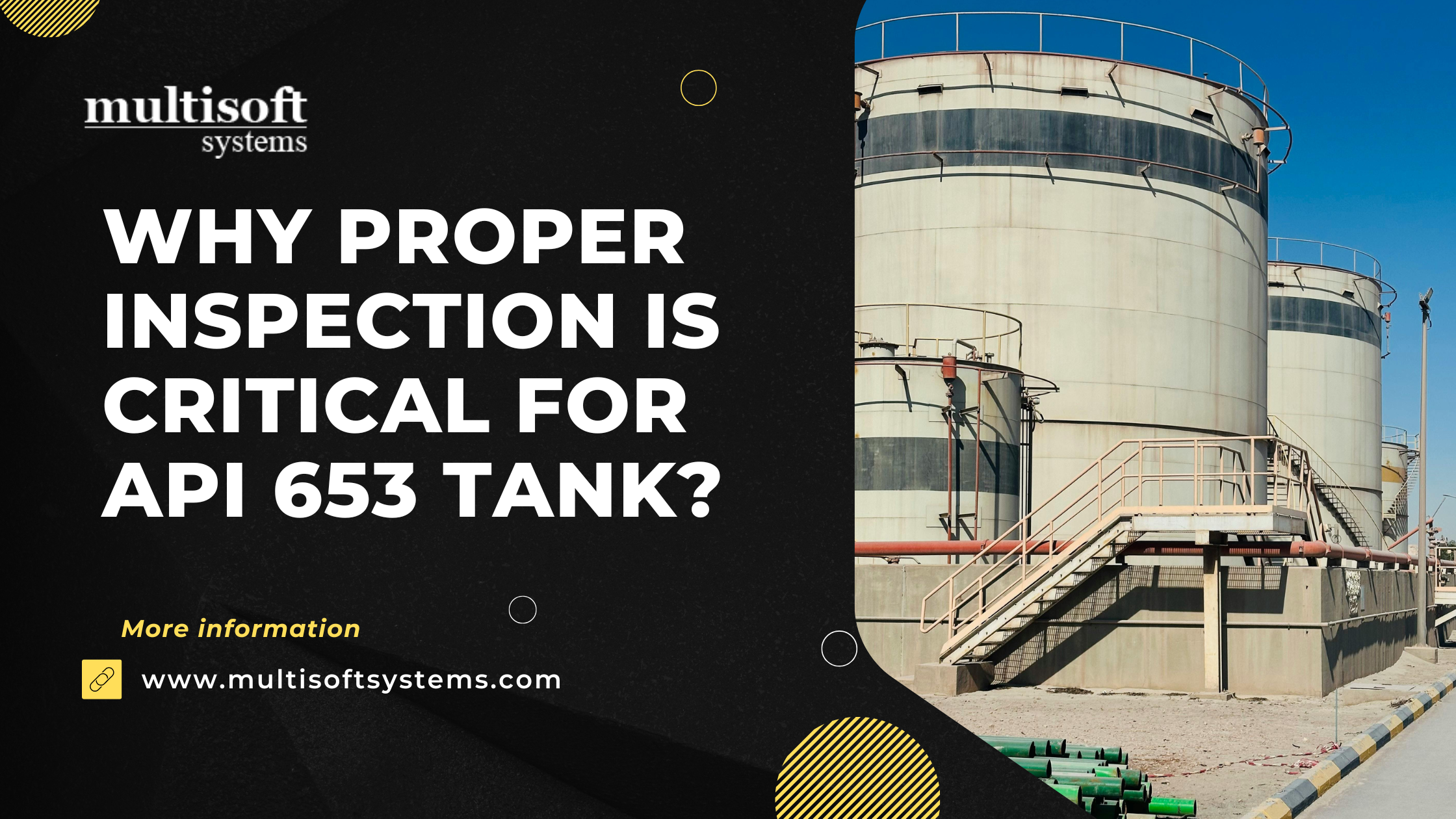
Aboveground storage tanks play a critical role in industries such as oil & gas, petrochemicals, chemicals, power generation, and bulk liquid storage. These tanks store flammable, hazardous, and high-value products, making their safety, reliability, and regulatory compliance non-negotiable. API 653 Tank Training focuses on the inspection, repair, alteration, and reconstruction of aboveground storage tanks to ensure structural integrity and operational safety throughout their service life.
API 653 is a globally recognized standard developed by the American Petroleum Institute for maintaining the mechanical integrity of welded steel storage tanks. This training equips engineers, inspectors, maintenance professionals, and asset managers with the technical knowledge and practical skills needed to evaluate tank condition, manage corrosion, plan repairs, and ensure compliance with industry best practices. As aging tank infrastructure and stricter regulatory oversight increase worldwide, API 653 online training has become an essential qualification for professionals responsible for tank assets.
What Is API 653?
API 653 is the industry standard that governs the inspection, repair, alteration, and reconstruction of aboveground storage tanks originally built to API 650 or similar construction codes. The standard provides detailed requirements for assessing tank condition, determining fitness-for-service, and extending tank life safely and economically.
API 653 goes beyond routine inspection by defining acceptance criteria, repair methods, inspection intervals, documentation requirements, and qualifications for inspectors. It bridges the gap between tank design standards and real-world operating conditions, accounting for corrosion, settlement, fatigue, environmental exposure, and operational damage. API 653 Tank Training helps professionals understand not just what the code says, but how to apply it in real inspection scenarios, maintenance planning, and decision-making processes.
Why API 653 Tank Training Is Important?
1. Ensuring Structural and Operational Safety
Storage tank failures can lead to catastrophic consequences, including fires, explosions, environmental pollution, production downtime, and loss of life. API 653 training enables professionals to identify degradation mechanisms early and take corrective actions before failures occur.
2. Regulatory and Compliance Requirements
Many regulatory bodies, insurance providers, and clients mandate API 653 compliance for aboveground storage tanks. Certified professionals are often required to sign off on inspections, repairs, and integrity assessments, making formal training indispensable.
3. Extending Tank Service Life
Replacing large storage tanks is expensive and disruptive. API 653 training teaches cost-effective inspection and repair strategies that safely extend tank life while minimizing operational interruptions.
4. Professional Credibility and Career Growth
API 653 certification and training significantly enhance professional credibility. It opens doors to roles such as tank inspector, mechanical integrity engineer, inspection coordinator, and asset integrity specialist across global industries.
Scope of API 653 Tank Training
API 653 Tank Training provides comprehensive coverage of technical, inspection, and maintenance aspects of aboveground storage tanks. The scope typically includes:
- Inspection planning and execution
- Evaluation of tank components and materials
- Corrosion assessment and mitigation
- Repair and alteration methods
- Fitness-for-service and remaining life calculations
- Documentation and reporting requirements
The training combines theoretical understanding of the code with practical examples drawn from real tank inspection and repair scenarios.
Types of Inspections
1. Routine In-Service Inspection
Routine in-service inspection is performed while the storage tank remains in operation and contains product. This inspection focuses on identifying visible signs of deterioration without interrupting normal operations. It includes regular visual checks of the tank shell, roof, nozzles, weld seams, appurtenances, and surrounding areas for leaks, corrosion, deformation, coating damage, or settlement indicators. API 653 training explains inspection frequencies, inspector responsibilities, and documentation requirements for in-service inspections. Emphasis is placed on early detection of abnormalities that could escalate into serious integrity issues if ignored. The training also covers monitoring operating conditions such as temperature, pressure, and product compatibility, which can accelerate degradation. Routine in-service inspections play a preventive role by supporting timely maintenance actions, improving tank reliability, and reducing the likelihood of unplanned shutdowns or safety incidents.
2. External Inspection
External inspection involves a detailed examination of all accessible external components of the storage tank and is conducted at defined intervals specified by API 653. This inspection covers the tank shell, roof structure, external piping connections, nozzles, manways, insulation systems, foundations, and settlement conditions. API 653 training teaches how to assess corrosion under insulation, coating failures, shell distortions, roof integrity, and foundation movement. Thickness measurements are often taken to evaluate metal loss and calculate corrosion rates. The training also explains acceptance criteria and methods for evaluating shell roundness, alignment, and weld condition. External inspection findings are critical for determining inspection intervals, repair requirements, and fitness-for-service decisions, making this inspection a key element of effective storage tank integrity management.
3. Internal Inspection
Internal inspection is the most comprehensive and critical inspection type under API 653 and is performed when the tank is taken out of service and cleaned for safe entry. This inspection allows direct access to internal surfaces, enabling thorough evaluation of the tank bottom, shell interior, welds, internal structures, and corrosion-prone areas. API 653 training covers safety requirements for confined space entry, inspection planning, and coordination with cleaning and gas-freeing activities. Inspectors learn how to assess corrosion patterns, pitting, cracking, and bottom plate deterioration using visual examination and nondestructive testing methods. Internal inspection data is essential for determining remaining life, repair scope, and suitability for continued service, making it a cornerstone of long-term tank integrity and compliance programs.
Tank Bottom Inspection and Evaluation
Tank bottom corrosion is a leading cause of storage tank failures. API 653 Tank certification provides detailed guidance on tank bottom inspection methods, including visual inspection, ultrasonic testing, magnetic flux leakage (MFL), and leak detection techniques. Participants learn how to assess corrosion rates, evaluate bottom plate remaining thickness, identify critical zones such as annular plates, and determine whether repairs, lining, or bottom replacement is required. Understanding these concepts is essential for preventing soil contamination and product loss.
Corrosion Mechanisms Addressed in API 653
API 653 training explains common corrosion mechanisms affecting aboveground storage tanks, such as:
- Uniform corrosion due to moisture and contaminants
- Localized pitting corrosion
- Soil-side corrosion of tank bottoms
- Product-side corrosion caused by aggressive stored fluids
- Microbiologically influenced corrosion (MIC)
The course emphasizes corrosion rate calculations and how inspection data is used to establish safe inspection intervals and remaining service life.
Repair, Alteration, and Reconstruction Under API 653
Repair, alteration, and reconstruction activities under API 653 are governed by strict technical and quality requirements to ensure that aboveground storage tanks continue to operate safely and in compliance with industry standards. API 653 training explains how these activities are classified, planned, and executed based on the extent of work and its impact on the original tank design. Repairs typically address localized damage such as corrosion, cracks, or minor mechanical defects, while alterations involve changes to the tank’s design or operating parameters. Reconstruction represents the most extensive level of work and is treated similarly to new tank construction. Understanding the distinctions between these categories is essential for selecting correct procedures, ensuring regulatory compliance, and maintaining tank integrity throughout its lifecycle.
- Repair under API 653 focuses on restoring the tank to its original design condition without changing its intended function. Repairs must follow approved welding procedures, qualified welders, and specified inspection hold points. Common repair activities include shell plate patching, nozzle repairs, roof component replacement, and bottom plate repair or replacement. All repairs require proper documentation and post-repair inspection to confirm compliance with acceptance criteria.
- Alteration under API 653 involves modifying the tank design, capacity, or service conditions. These changes require engineering evaluation to ensure structural adequacy. Examples include increasing tank height, adding new nozzles, changing roof type, or modifying operating temperature limits. Alterations must comply with API 653 and, where applicable, API 650 design requirements.
- Reconstruction under API 653 applies when major portions of the tank are rebuilt, such as complete bottom replacement or shell reconstruction. Reconstruction requires comprehensive engineering design, material verification, inspection, and testing equivalent to new construction standards.
Key aspects covered in API 653 training include:
- Classification of work as repair, alteration, or reconstruction
- Applicable codes, standards, and design checks
- Welding procedure qualification and welder certification
- Inspection, testing, and quality control requirements
- Documentation, approval, and compliance reporting
Mastering these concepts ensures safe execution of tank modification activities while protecting asset integrity and operational reliability.
Risk-Based Inspection (RBI) Concepts
API 653 Tank Training often introduces the fundamentals of risk-based inspection as applied to storage tanks. RBI integrates the probability of failure with the consequence of failure to prioritize inspection activities and maintenance resources. By understanding RBI principles, professionals can optimize inspection schedules, reduce unnecessary downtime, and focus attention on high-risk tanks without compromising safety or compliance. One of the most valuable aspects of API 653 training is learning how to evaluate tank fitness-for-service. The course explains how inspection data is translated into engineering decisions using thickness measurements, corrosion rates, and minimum allowable thickness calculations. Participants gain insight into determining whether a tank can continue operating safely, requires repair, or must be removed from service. This knowledge is critical for asset integrity management and long-term maintenance planning.
Documentation, Reporting, and Record Keeping
API 653 places strong emphasis on documentation and traceability. Training covers inspection reports, repair records, drawings, thickness measurement data, corrosion rate calculations, and inspection interval documentation. Participants learn how to prepare inspection reports that meet audit, regulatory, and insurance requirements. Proper documentation also supports informed decision-making and long-term asset management strategies.
Who Should Attend API 653 Tank Training?
API 653 Tank Training is suitable for a wide range of professionals, including:
- Mechanical and inspection engineers
- Storage tank inspectors and supervisors
- Maintenance and reliability engineers
- Asset integrity and corrosion engineers
- QA/QC professionals
- Engineering consultants and inspectors
The course is particularly valuable for professionals involved in inspection planning, integrity assessment, maintenance decision-making, and regulatory compliance.
Benefits of Completing API 653 Tank Training
Completing API 653 Tank Training offers multiple professional and organizational benefits:
- Enhances understanding of inspection, repair, and maintenance requirements for aboveground storage tanks
- Improves ability to identify corrosion, defects, and integrity risks at an early stage
- Ensures compliance with globally accepted API 653 inspection and maintenance standards
- Builds confidence in performing routine, external, and internal tank inspections
- Strengthens knowledge of fitness-for-service and remaining life assessment methods
- Supports effective planning of tank repairs, alterations, and reconstruction activities
- Reduces risk of leaks, failures, environmental incidents, and unplanned shutdowns
- Improves documentation, reporting, and audit readiness for regulatory and insurance reviews
- Extends the service life of storage tanks while optimizing maintenance costs
- Enhances professional credibility and career opportunities in inspection and asset integrity roles
Organizations benefit from reduced downtime, extended asset life, and improved regulatory confidence when trained professionals manage tank integrity programs.
API 653 Tank Training is applicable across multiple industries, including oil refineries, petrochemical plants, chemical manufacturing, terminals, pipelines, power plants, and bulk storage facilities. Any facility operating aboveground storage tanks can benefit from professionals trained in API 653 principles.
Conclusion
API 653 Tank Training is a critical investment for professionals and organizations responsible for the safety, reliability, and compliance of aboveground storage tanks. The training provides a structured understanding of inspection techniques, corrosion management, repair methods, and fitness-for-service evaluation aligned with globally accepted industry standards.
As storage tank infrastructure continues to age and regulatory scrutiny increases, the demand for skilled API 653 professionals continues to grow. By mastering API 653 principles through formal training, professionals not only enhance their technical expertise but also play a vital role in protecting people, assets, and the environment while ensuring long-term operational excellence. Enroll in Multisoft Systems now!