Course Schedule
| Oct, 2026 | Weekdays | Mon-Fri | Enquire Now |
| Weekend | Sat-Sun | Enquire Now | |
| Nov, 2026 | Weekdays | Mon-Fri | Enquire Now |
| Weekend | Sat-Sun | Enquire Now |
Android Automotive OS: Features, Architecture, Benefits, and Future Trends
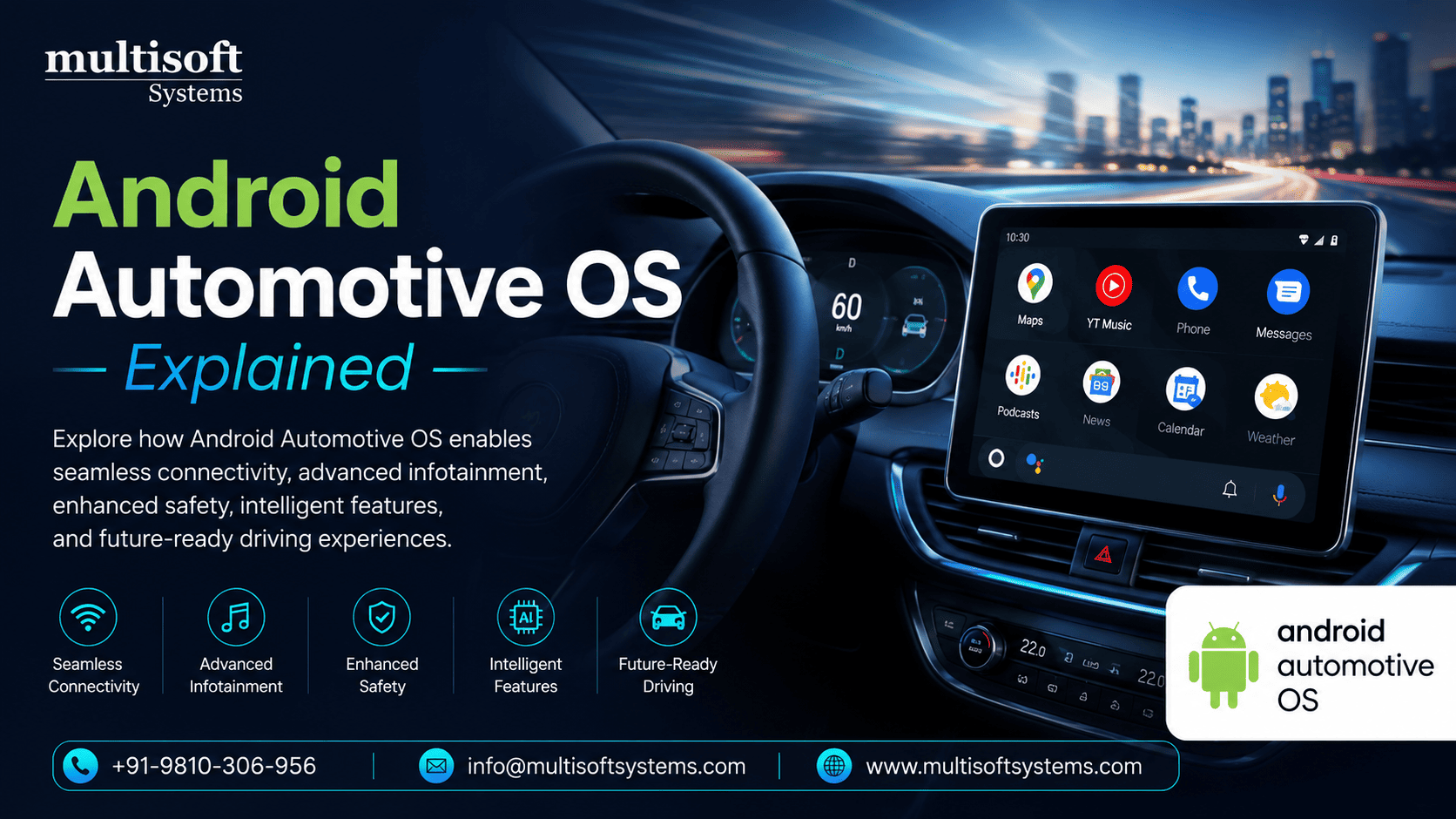
The automotive industry is undergoing a major digital transformation. Vehicles are no longer just mechanical machines; they have evolved into intelligent software-driven platforms capable of delivering advanced user experiences, real-time connectivity, navigation, entertainment, and vehicle management. At the center of this evolution is Android Automotive OS (AAOS), Google's open-source operating system designed specifically for vehicles. Unlike traditional infotainment systems that rely on proprietary software, Android Automotive OS provides a flexible, scalable, and highly customizable platform that runs directly on vehicle hardware. It enables automakers to create modern digital cockpits, integrate vehicle functions, and deliver continuous software updates throughout a vehicle's lifecycle.
As connected vehicles and Software-Defined Vehicles (SDVs) become the industry standard, Android Automotive OS online training is emerging as one of the most important technologies shaping the future of automotive innovation.
What is Android Automotive OS?
Android Automotive OS is a vehicle-native operating system built on the Android Open-Source Project (AOSP). It is designed specifically for automotive environments and operates directly on the vehicle's hardware without requiring a smartphone connection. Many people confuse Android Automotive OS with Android Auto, but they serve different purposes.
1. Android Auto
- Requires a smartphone
- Mirrors mobile applications onto the vehicle display
- Functions as a projection system
2. Android Automotive OS
- Runs directly inside the vehicle
- Operates independently of a smartphone
- Supports native vehicle applications
- Integrates with vehicle systems and sensors
This distinction makes Android Automotive OS a complete automotive platform rather than simply a smartphone extension.
Evolution of Automotive Operating Systems
Traditional infotainment systems were often developed separately by individual manufacturers. These systems frequently suffered from:
- Limited functionality
- Slow software updates
- Poor user experience
- Inconsistent interfaces
- High development costs
As consumer expectations increased due to smartphones and cloud-connected devices, automakers needed a more advanced software platform capable of supporting modern applications and services. Android Automotive OS training emerged as a solution by combining:
- Open-source flexibility
- Large developer ecosystem
- Modern user interface capabilities
- Cloud connectivity
- Over-the-air update support
Today, many leading automotive manufacturers are adopting Android Automotive OS to accelerate innovation and improve customer experiences.
Core Architecture
Android Automotive OS follows a layered architecture designed to separate hardware functionality from applications and user interfaces.
1. Hardware Layer
The Hardware Layer forms the foundation of Android Automotive OS and consists of all the physical components installed in a vehicle. These include displays, touchscreens, GPS modules, microphones, speakers, cameras, sensors, Electronic Control Units (ECUs), and communication interfaces. This layer collects and generates real-time vehicle data that is used by higher software layers. Whether it is monitoring vehicle speed, detecting environmental conditions, or enabling infotainment features, the Hardware Layer provides the essential infrastructure required for the operating system to function effectively.
2. Hardware Abstraction Layer (HAL)
The Hardware Abstraction Layer (HAL) acts as an intermediary between the vehicle hardware and the Android software framework. It provides a standardized interface that allows software applications to communicate with hardware components without needing to understand their specific implementations. HAL simplifies hardware integration by translating software requests into hardware-specific commands. This approach improves compatibility across different vehicle models and manufacturers, enabling developers to build applications that can function consistently regardless of the underlying hardware configuration.
3. Android Framework Layer
The Android Framework Layer provides the core software services and APIs that support application development and system functionality. It manages essential functions such as activity management, resource allocation, notifications, security, media playback, and user interface rendering. In Android Automotive OS, this layer is enhanced with automotive-specific capabilities that allow applications to interact with vehicle features. By offering a structured development environment, the Android Framework Layer enables developers to create reliable, scalable, and user-friendly automotive applications while maintaining system stability and performance.
4. Automotive Services Layer
The Automotive Services Layer contains specialized services designed specifically for vehicle operations. It manages communication between applications and vehicle systems such as climate control, power management, audio routing, driver profiles, and vehicle status monitoring. This layer provides vehicle-aware intelligence that helps applications access real-time automotive data securely and efficiently. By centralizing automotive functionality, the Automotive Services Layer ensures seamless integration between software features and vehicle operations, delivering a consistent and responsive driving experience for users.
5. Application Layer
The Application Layer is the topmost layer of Android Automotive OS and represents the user-facing part of the system. It includes navigation apps, media streaming services, communication tools, vehicle management applications, and other third-party software. These applications interact with lower system layers through standardized APIs to deliver various services to drivers and passengers. The Application Layer enables personalized experiences, enhanced connectivity, and convenient access to vehicle functions, making it a critical component in creating modern, intelligent, and connected automotive ecosystems.
Key Features
1. Native Vehicle Integration
One of AAOS's most powerful capabilities is its ability to directly communicate with vehicle systems. Examples include:
- Air conditioning control
- Seat adjustments
- Battery monitoring
- Vehicle diagnostics
- Driving mode selection
- Energy management
This level of integration creates a seamless user experience that traditional infotainment systems struggle to achieve.
2. Google Services Integration
Manufacturers can optionally integrate Google Automotive Services (GAS), which includes:
- Google Maps
- Google Assistant
- Google Play Store
- Google Voice Services
These services bring familiar smartphone-like functionality directly into the vehicle.
3. Voice-Based Interaction
Modern vehicles increasingly rely on hands-free operation. Android Automotive OS supports:
- Voice navigation
- Media control
- Calling and messaging
- Vehicle settings control
- Information retrieval
Voice interaction helps reduce driver distraction while improving convenience.
4. Multi-Display Support
Modern vehicles often feature multiple screens. AAOS supports:
- Digital instrument clusters
- Central infotainment displays
- Rear-seat entertainment screens
- Passenger displays
- Heads-up displays
This flexibility enables manufacturers to create unique cockpit designs.
5. Over-the-Air Updates
Traditional vehicle software updates often required dealership visits. Android Automotive OS enables:
- Remote software deployment
- Security updates
- Feature enhancements
- Bug fixes
- Application updates
This capability significantly improves software maintenance efficiency.
Application Development in Android Automotive OS
Application development in Android Automotive OS (AAOS) enables developers to create intelligent, vehicle-native applications that run directly on a car’s hardware without requiring a smartphone connection. Built on the Android Open-Source Project (AOSP), AAOS leverages the familiar Android development ecosystem, allowing developers to use tools such as Android Studio, Kotlin, Java, and Android SDKs to build automotive applications. Unlike traditional mobile apps, automotive applications must be designed with driver safety, minimal distraction, and ease of use as primary considerations. Google provides specialized Automotive APIs and design guidelines that help developers create applications optimized for in-vehicle environments.
Developers can build a wide variety of applications for Android Automotive OS, including navigation systems, media streaming platforms, communication tools, voice assistants, vehicle diagnostics applications, fleet management solutions, and electric vehicle monitoring systems. These applications can access vehicle data through secure automotive APIs, enabling features such as battery status monitoring, climate control integration, vehicle health reporting, and real-time navigation assistance. The platform also supports Google Automotive Services, allowing integration with Google Maps, Google Assistant, and the Google Play Store where supported by the vehicle manufacturer.
A key advantage of Android Automotive OS certification application development is its support for over-the-air updates, enabling developers to deliver new features, performance improvements, and security patches throughout a vehicle's lifecycle. Additionally, developers can create adaptive user interfaces that function across multiple displays, including infotainment screens, digital instrument clusters, and passenger displays. Security is another critical aspect, with permission-based access controls and application sandboxing ensuring safe interaction with vehicle systems. As connected vehicles and Software-Defined Vehicles (SDVs) become increasingly common, Android Automotive OS provides a robust and scalable platform for developing innovative automotive applications that enhance driver convenience, passenger experience, and overall vehicle intelligence.
Security Architecture
Security Architecture is a critical component of Android Automotive OS, designed to protect vehicle systems, user data, and connected services from cyber threats. The platform incorporates multiple layers of security, including secure boot, application sandboxing, permission-based access controls, and encrypted communication. Secure boot ensures that only verified and trusted software is loaded during system startup, preventing unauthorized modifications. Application sandboxing isolates apps from one another, reducing the risk of malicious activities affecting the entire system. Permission management restricts access to sensitive resources such as location, microphones, vehicle data, and network services. Additionally, Android Automotive OS supports regular security updates and over-the-air patches, helping manufacturers address vulnerabilities and maintain a secure, reliable, and trustworthy automotive environment.
Advantages of Android Automotive OS
- Directly connects with vehicle systems such as climate control, battery management, navigation, and diagnostics.
- Provides a modern, intuitive, and smartphone-like interface for drivers and passengers.
- Built on Android Open-Source Project (AOSP), offering flexibility and customization for automakers.
- Leverages millions of Android developers and existing development tools.
- Can integrate Google Maps, Google Assistant, and Google Play Store for enhanced functionality.
- Enables remote software updates, bug fixes, and feature enhancements without dealership visits.
- Supports infotainment screens, digital instrument clusters, rear-seat displays, and heads-up displays.
- Allows hands-free operation through advanced voice commands and virtual assistants.
Challenges of Android Automotive OS
Despite its benefits, several challenges remain.
- Connected vehicles generate significant amounts of operational and user data. Managing data collection, storage, and privacy remains a major concern for manufacturers and consumers.
- Increased connectivity creates larger attack surfaces that require constant monitoring and protection.
- Different vehicle manufacturers use unique hardware configurations, making standardization challenging.
- Automotive software must satisfy strict safety and regional regulatory requirements.
- Automakers must balance platform standardization with the need to maintain unique brand identities.
Android Automotive OS and Software-Defined Vehicles
Android Automotive OS (AAOS) is playing a significant role in the evolution of Software-Defined Vehicles (SDVs), where software becomes the primary driver of innovation, functionality, and customer experience. Traditionally, vehicle features were largely dependent on hardware components, making upgrades difficult and costly. In contrast, SDVs rely on software platforms that allow manufacturers to continuously enhance vehicle capabilities through updates and new digital services. Android Automotive OS provides a robust foundation for this transformation by offering a flexible, scalable, and vehicle-native operating system that runs directly on automotive hardware.
AAOS enables seamless integration between vehicle systems, cloud services, and user applications, creating a connected ecosystem that can evolve throughout the vehicle’s lifecycle. Features such as over-the-air (OTA) updates allow manufacturers to deploy security patches, performance improvements, and entirely new functionalities without requiring dealership visits. The platform also supports personalization, advanced infotainment, voice assistants, and real-time vehicle monitoring, all of which are essential components of modern SDVs. Furthermore, Android Automotive OS simplifies software development by leveraging the Android ecosystem and extensive developer community. As automakers increasingly adopt software-centric strategies, AAOS is becoming a key enabler of Software-Defined Vehicles, helping manufacturers deliver smarter, more connected, and continuously improving mobility experiences to drivers and passengers.
Conclusion
Android Automotive OS represents a major milestone in the evolution of connected vehicles. By providing a flexible, scalable, and open-source platform, it enables automakers to deliver intelligent digital experiences while reducing software development complexity. From infotainment and navigation to vehicle management and cloud connectivity, AAOS is transforming how drivers interact with their vehicles.
As the industry moves toward Software-Defined Vehicles, artificial intelligence, and continuous software innovation, Android Automotive OS is expected to play an increasingly important role in shaping the future of mobility. Its ability to combine automotive functionality with the power of the Android ecosystem positions it as one of the most influential technologies in the next generation of connected transportation. Enroll in Multisoft Systems now!