Course Schedule
| Oct, 2026 | Weekdays | Mon-Fri | Enquire Now |
| Weekend | Sat-Sun | Enquire Now | |
| Nov, 2026 | Weekdays | Mon-Fri | Enquire Now |
| Weekend | Sat-Sun | Enquire Now |
CISSP Certification: The Key to Building a Successful Cybersecurity Career
In today's highly connected digital world, cybersecurity has become one of the most critical priorities for organizations of all sizes. Businesses, governments, and individuals increasingly rely on technology for daily operations, making sensitive information a valuable target for cybercriminals. As cyberattacks continue to grow in frequency and sophistication, organizations are actively seeking skilled cybersecurity professionals who can protect their digital assets and maintain secure environments. The demand for cybersecurity experts has surged across industries including finance, healthcare, manufacturing, telecommunications, and government sectors. Companies are investing heavily in cybersecurity strategies, creating numerous career opportunities for qualified professionals. However, employers often look for certifications that validate a candidate's knowledge, skills, and practical understanding of information security.
Among the many cybersecurity certifications available today, the Certified Information Systems Security Professional (CISSP) certification stands out as one of the most respected and globally recognized credentials. It demonstrates a professional's expertise in designing, implementing, and managing enterprise security programs. Earning CISSP certification not only enhances technical knowledge but also opens doors to leadership positions, higher salaries, and long-term career growth. For professionals seeking a successful cybersecurity career, CISSP is often considered a valuable milestone and a powerful investment in their future.
What is CISSP Certification?
The Certified Information Systems Security Professional (CISSP) certification is a globally recognized cybersecurity credential offered by ISC2. It is designed for experienced security professionals who are responsible for developing, implementing, and managing cybersecurity programs within organizations. CISSP validates a candidate's expertise across multiple areas of information security, including risk management, network security, security operations, asset protection, and software security. Unlike many technical certifications that focus on specific products or technologies, CISSP takes a broad, vendor-neutral approach to cybersecurity. This makes it highly respected across industries and countries. The certification is particularly valuable for professionals aspiring to leadership and management roles because it combines technical security knowledge with governance, compliance, and strategic risk management concepts. Employers worldwide view CISSP certification as proof of advanced cybersecurity competence and commitment to professional excellence.
Why Cybersecurity Careers Are Growing Rapidly
-
Increasing Cyber Threats
Cyberattacks have become more frequent, sophisticated, and damaging than ever before. Organizations face threats such as ransomware attacks, phishing campaigns, data breaches, insider threats, and advanced persistent attacks. As cybercriminals continue to develop new techniques, companies require skilled professionals who can identify vulnerabilities, respond to incidents, and protect critical systems. The growing threat landscape has significantly increased the need for cybersecurity expertise.
- Industry Demand
Digital transformation initiatives have accelerated the adoption of cloud computing, artificial intelligence, Internet of Things (IoT), and remote work environments. While these technologies offer significant benefits, they also introduce new security challenges. Organizations across every sector are investing heavily in cybersecurity infrastructure and talent to protect their operations, making cybersecurity one of the fastest-growing career fields worldwide.
- Global Skill Shortage
Despite rising demand, there remains a substantial shortage of qualified cybersecurity professionals. Many organizations struggle to fill security-related positions due to the lack of skilled candidates. This talent gap creates excellent opportunities for certified professionals who possess recognized credentials such as CISSP. The shortage is expected to continue for years, ensuring strong career prospects and competitive salaries.
CISSP Certification Domains Explained
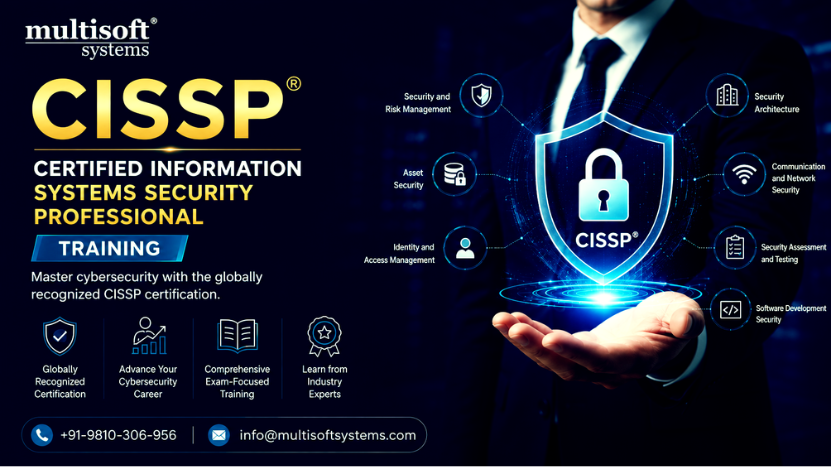
The CISSP certification covers eight comprehensive domains that collectively represent the essential knowledge required for modern cybersecurity professionals. These domains help candidates develop a balanced understanding of both technical and managerial aspects of information security.
- Security and Risk Management
Security and Risk Management forms the foundation of the CISSP certification and focuses on establishing a strong security governance framework within an organization. This domain covers information security policies, procedures, legal and regulatory requirements, business continuity planning, professional ethics, and risk assessment methodologies. Cybersecurity professionals use these principles to identify potential threats, evaluate risks, and implement effective controls that align security objectives with business goals. A strong understanding of risk management enables organizations to make informed decisions regarding security investments and compliance requirements.
- Asset Security
Asset Security focuses on protecting an organization's information and critical resources throughout their lifecycle. This domain covers data classification, ownership, retention, privacy protection, secure storage, and data disposal practices. Professionals learn how to identify valuable assets, determine appropriate security controls, and ensure sensitive information remains protected against unauthorized access, modification, or loss. Effective asset security helps organizations maintain confidentiality, integrity, and availability of their most important information.
- Security Architecture and Engineering
Security Architecture and Engineering involves designing, implementing, and maintaining secure systems and infrastructures. This domain covers security models, cryptography, secure design principles, physical security, vulnerability management, and security engineering processes. CISSP professionals learn how to build resilient environments that can withstand cyber threats while supporting business operations. Understanding secure architecture is essential for creating systems that protect sensitive data and maintain operational continuity.
- Communication and Network Security
Communication and Network Security focuses on securing an organization's network infrastructure and communication channels. This domain includes network architecture, transmission methods, secure protocols, network devices, and access control mechanisms. Professionals learn how to design secure networks, protect data during transmission, and defend against attacks such as eavesdropping, spoofing, and unauthorized access. Strong network security practices are critical for safeguarding modern digital environments and ensuring reliable business communications.
- Identity and Access Management (IAM)
Identity and Access Management (IAM) focuses on controlling who can access organizational resources and what actions they are authorized to perform. This domain covers authentication methods, authorization mechanisms, identity governance, single sign-on solutions, multifactor authentication, and account management practices. CISSP professionals learn how to establish effective access controls that prevent unauthorized users from accessing sensitive systems while ensuring legitimate users can perform their responsibilities efficiently and securely.
- Security Assessment and Testing
Security Assessment and Testing involves evaluating the effectiveness of security controls and identifying vulnerabilities before they can be exploited by attackers. This domain covers security audits, penetration testing, vulnerability assessments, security monitoring, and testing methodologies. Professionals learn how to measure the performance of security programs, validate compliance requirements, and continuously improve organizational security. Regular assessments help organizations proactively identify weaknesses and strengthen their defenses against cyber threats.
- Security Operations
Security Operations focuses on the day-to-day activities required to maintain and improve an organization's security posture. This domain includes incident response, threat monitoring, disaster recovery, business continuity, logging and monitoring, digital forensics, and operational security procedures. CISSP professionals learn how to detect, respond to, and recover from security incidents effectively. Strong security operations ensure that organizations can minimize the impact of cyberattacks and maintain critical business functions during disruptions.
- Software Development Security
Software Development Security addresses the integration of security practices throughout the software development lifecycle. This domain covers secure coding standards, application security testing, vulnerability management, software acquisition, and development methodologies. Professionals learn how to identify and mitigate security risks during application design, development, testing, and deployment. By incorporating security into every stage of software development, organizations can reduce vulnerabilities, protect sensitive data, and deliver more secure applications to users.
How to Prepare for CISSP Certification Successfully
- Understand the CISSP exam structure and domain weightage.
- Create a realistic and structured study plan.
- Review the official CISSP exam outline thoroughly.
- Use the Official CISSP Study Guide and reference materials.
- Focus on understanding concepts rather than memorizing answers.
- Take regular practice exams to identify knowledge gaps.
- Join CISSP study groups and cybersecurity communities.
- Watch instructor-led training sessions and webinars.
- Study real-world cybersecurity case studies and scenarios.
- Strengthen knowledge in weaker domains through targeted learning.
- Develop time-management skills for the exam.
- Practice answering scenario-based questions.
- Review security frameworks, standards, and regulations.
- Stay updated with current cybersecurity trends and threats.
- Schedule regular revision sessions before the examination.
Why Employers Value CISSP-Certified Professionals
Employers highly value CISSP-certified professionals because the certification demonstrates both technical expertise and strategic security knowledge. Organizations need cybersecurity experts who can not only identify and mitigate threats but also align security initiatives with business objectives. CISSP certification validates a professional's ability to manage risk, ensure regulatory compliance, design secure systems, and lead security programs effectively. Since the certification requires substantial work experience and covers a broad range of security domains, employers view CISSP holders as capable professionals who can handle complex security challenges. Additionally, CISSP-certified individuals often possess strong leadership, communication, and decision-making skills, making them ideal candidates for senior-level cybersecurity positions and management roles.
Future of CISSP and Cybersecurity Careers
The future of cybersecurity remains exceptionally promising as organizations continue to face evolving digital threats. Emerging technologies such as artificial intelligence, machine learning, cloud computing, blockchain, and the Internet of Things are creating new opportunities while introducing additional security risks. As businesses increasingly depend on digital infrastructure, cybersecurity will become even more critical to organizational success. Regulatory requirements and data privacy laws are also expanding globally, further increasing the demand for skilled security professionals. CISSP certification is expected to remain one of the most respected credentials in the industry because it addresses both current and future cybersecurity challenges. Professionals who earn CISSP certification position themselves for long-term career growth, leadership opportunities, and continued relevance in a rapidly changing technology landscape.
Conclusion
Cybersecurity has become a fundamental business requirement in today's digital economy, and organizations across the globe are actively searching for qualified professionals who can protect their systems, networks, and sensitive information. As cyber threats continue to evolve, the demand for highly skilled cybersecurity experts is expected to grow even further, creating excellent career opportunities for individuals who possess the right knowledge and credentials. The Certified Information Systems Security Professional (CISSP) certification has established itself as one of the most respected and valuable certifications in the cybersecurity industry. Its comprehensive coverage of security domains, focus on risk management, and emphasis on strategic security leadership make it a powerful credential for professionals seeking career advancement. Beyond validating technical expertise, CISSP demonstrates a commitment to professional excellence and continuous learning.
Whether you are aiming to become a Security Analyst, Security Architect, Information Security Manager, or Chief Information Security Officer, CISSP can significantly enhance your professional credibility and open doors to higher-paying positions. With cybersecurity continuing to play a critical role in every industry, earning CISSP certification can be a transformative step toward building a successful, rewarding, and future-proof cybersecurity career. Investing in CISSP today can help professionals remain competitive and thrive in the rapidly evolving world of information security. Enroll in Multisoft Systems now!