Course Schedule
| Oct, 2026 | Weekdays | Mon-Fri | Enquire Now |
| Weekend | Sat-Sun | Enquire Now | |
| Nov, 2026 | Weekdays | Mon-Fri | Enquire Now |
| Weekend | Sat-Sun | Enquire Now |
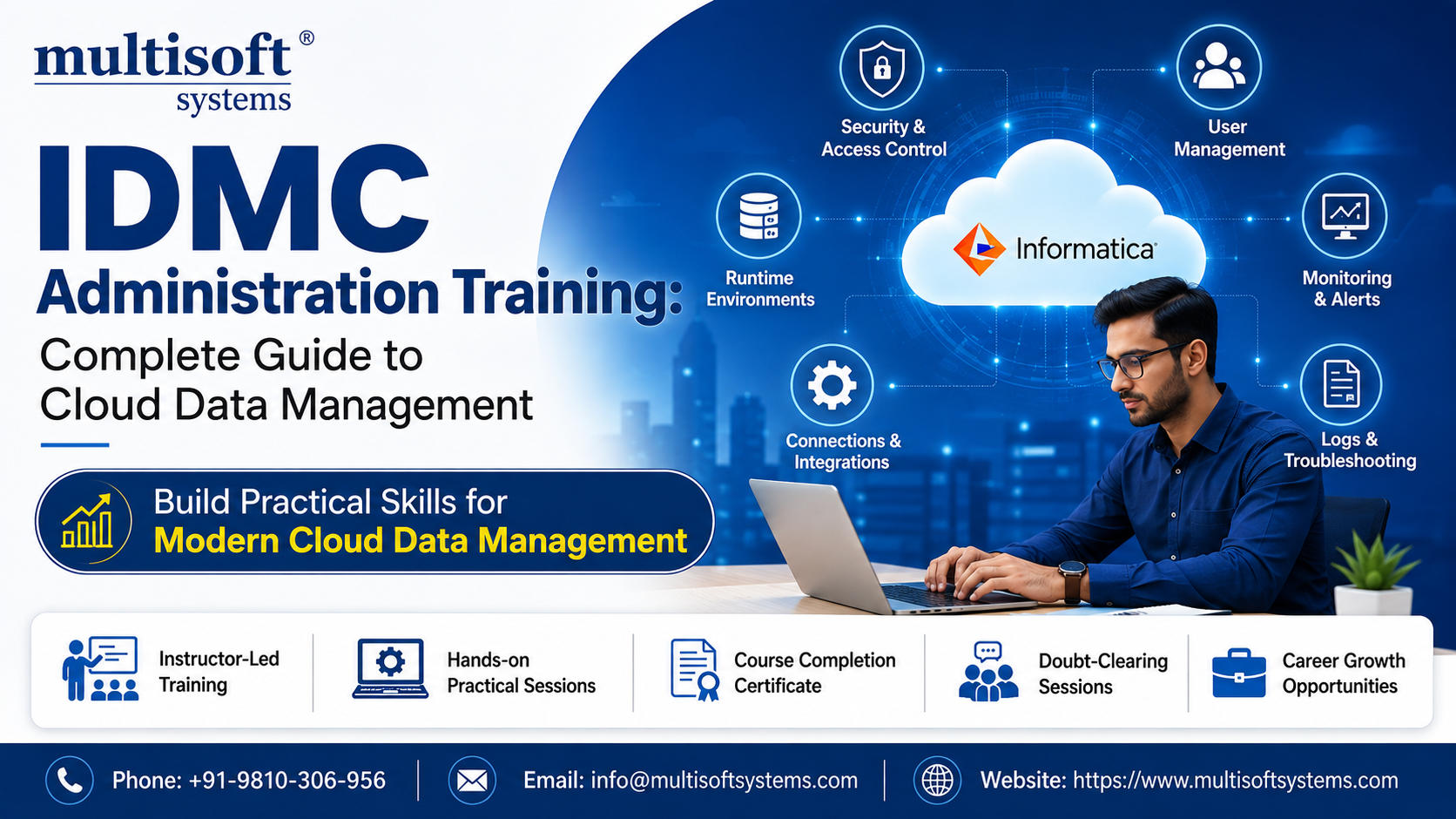
IDMC Administration Training: Complete Guide to Cloud Data Management
IDMC Administration Training is designed to help IT and data professionals develop practical skills for managing Informatica Intelligent Data Management Cloud environments. The training covers important administration areas such as IDMC architecture, organization and sub-organization management, user roles, authentication, security, runtime environments, Secure Agents, connections, asset management, scheduling, monitoring, REST APIs, and troubleshooting. Learners can understand how administrators manage users, permissions, cloud resources, system activities, and operational tasks within IDMC. The program is particularly relevant for system administrators, network administrators, IT managers, security analysts, database administrators, IT support specialists, technical consultants, and data center managers. Multisoft Systems combines theoretical concepts with practical exercises, real-world scenarios, industry case studies, and hands-on assignments to support practical learning. The training also includes certification-oriented assessment and guidance, helping participants strengthen their understanding of cloud-based data administration.
This guide explains what IDMC administration involves, what you can learn through training, who should join the program, and how these skills can support professional growth in cloud data management.
What Is IDMC Administration?
IDMC Administration refers to the management, configuration, security, monitoring, and maintenance of an Informatica Intelligent Data Management Cloud environment. An IDMC administrator is responsible for managing important areas such as organizations, users, roles, runtime environments, connections, assets, schedules, permissions, and system activity. Administration also includes monitoring jobs, reviewing logs, managing alerts, and troubleshooting common issues. Effective administration helps organizations maintain organized and secure cloud data operations while ensuring that users have appropriate access to the resources they need. For professionals working with cloud data environments, understanding IDMC administration provides practical knowledge of how different components of the platform are managed and maintained.
Why Is IDMC Administration Important?
IDMC administration is important because cloud data environments require proper security, configuration, user management, monitoring, and operational control. A well-managed environment can help organizations maintain appropriate access, monitor activities, manage runtime resources, and identify problems through logs and alerts. Administrators also need to manage connections, schedules, assets, and organizational settings to support daily operations. As data environments become more complex, practical administration skills can help professionals manage these responsibilities in a structured manner.
Key Points
- User Management - Manage users, roles, authentication, and user groups.
- Security Management - Control permissions and access to IDMC resources.
- Organization Management - Manage organizations, sub-organizations, and related settings.
- Runtime Environment Management - Configure and monitor Secure Agents, groups, and services.
- Connection Management - Create and manage connections and connection properties.
- Asset Management - Organize projects, tags, permissions, dependencies, and other assets.
- Scheduling - Create schedules and manage blackout periods.
- Monitoring - Monitor jobs, events, alerts, and operational activities.
- Troubleshooting - Use logs and available resources to identify and resolve common issues.
- API Management - Use REST APIs for different administrative tasks.
IDMC Administration and Modern Data Management Trends
Cloud-based data environments are becoming an important part of modern enterprise data management. As organizations manage data across multiple systems and applications, they need centralized approaches to administration, integration, security, and monitoring. IDMC supports cloud-based data management while administration helps manage users, runtime environments, connections, assets, schedules, and system activities. Security and controlled access are also increasingly important as organizations work with business-critical data. Monitoring, logs, and alerts provide operational visibility and help administrators identify issues. For professionals, developing practical cloud administration skills can support effective management of modern data environments and evolving enterprise data requirements.
IDMC Administration Training for Beginners
IDMC Administration Training is a useful starting point for professionals who want to develop practical skills in managing Informatica Intelligent Data Management Cloud environments. Beginners can learn the fundamentals of IDMC architecture and gradually move into areas such as organization management, user administration, security, runtime environments, connections, asset management, scheduling, monitoring, REST APIs, and troubleshooting. A basic understanding of networking concepts and protocols, along with experience in system or server administration, can help learners understand these topics more effectively. Practical learning is particularly valuable because IDMC administration involves real administrative tasks such as configuring Secure Agents, managing users and permissions, monitoring jobs, reviewing logs, and resolving common issues. Multisoft Systems combines theoretical concepts with practical exercises, real-world scenarios, industry case studies, and hands-on assignments to help beginners build a stronger understanding of IDMC administration.
Informatica Cloud Overview
Informatica Cloud provides a cloud-based environment for managing data integration and related data management activities. In the IDMC administration context, understanding the Informatica Cloud environment helps learners become familiar with its architecture, services, organization settings, and administrative functions. The training introduces IICS as an Integration Platform as a Service (iPaaS) and covers the Informatica Cloud architecture and its different services. Learners also study the Administrator Service, which is important for managing the cloud environment and its administrative settings. Organization-level configuration is another key area, helping administrators understand how settings are managed within the Informatica Cloud environment. These fundamentals provide a foundation for learning more advanced IDMC administration topics such as sub-organization management, users, runtime environments, security, connections, monitoring, and troubleshooting.
IDMC Security Management
IDMC Security Management is an important part of administering an Informatica Intelligent Data Management Cloud environment. It focuses on controlling access to IDMC resources and ensuring that users receive appropriate permissions based on their responsibilities. Administrators need to manage user roles, authentication, groups, permissions, and organization-level access carefully. Security management also works alongside monitoring and audit-related activities, helping administrators maintain better visibility into system and user activities. Proper security practices can help organizations create a controlled cloud data environment while reducing the risk of inappropriate access to important resources. For IDMC administrators, understanding security settings and user management is therefore essential for maintaining an organized and properly managed platform.
IDMC Administration Best Practices
- Maintain appropriate user roles and permissions.
- Use user groups to organize access effectively.
- Review authentication and access settings regularly.
- Manage organizations and sub-organizations carefully.
- Monitor Secure Agents and runtime environments.
- Review logs when investigating system issues.
- Monitor jobs, events, and alerts regularly.
- Keep connections and assets properly organized.
- Manage schedules and blackout periods carefully.
- Review asset-level permissions and dependencies.
- Maintain proper administrative documentation.
- Use REST APIs appropriately for administrative activities.
- Follow structured troubleshooting procedures.
- Keep administrators familiar with new IDMC capabilities and technologies.
Common IDMC Administration Learning Challenges
Learning IDMC administration can be challenging because it involves several interconnected areas of cloud data management. Beginners may need time to understand the IDMC architecture, organization structure, user roles, permissions, runtime environments, Secure Agents, connections, and asset management. Security management can also be complex because administrators need to understand how users, groups, roles, and permissions work together. Monitoring and troubleshooting may require additional practice because learners need to review job information, logs, alerts, and system resources to identify problems. REST APIs can introduce another learning curve for professionals who have limited API experience. Understanding all these areas together can take time, particularly for learners who are new to cloud administration.
How to Overcome IDMC Learning Challenges
A structured and practical learning approach can make IDMC administration easier to understand. Beginners should start with IDMC architecture and basic administration concepts before moving into advanced topics. Practicing user management, roles, permissions, runtime environments, Secure Agents, and connections can help build confidence. Learners should also work with monitoring tools, logs, alerts, and troubleshooting scenarios instead of focusing only on theoretical concepts. Practical exercises can help them understand how different administrative components work together. Multisoft Systems' training approach includes practical exercises, real-world scenarios, industry case studies, and hands-on assignments, which can help learners connect IDMC administration concepts with practical workplace situations.
Who Should Learn IDMC Administration?
- System Administrators
- Network Administrators
- IT Managers
- Security Analysts
- Database Administrators
- IT Support Specialists
- Technical Consultants
- Data Center Managers
IDMC Administration Career Opportunities
- IDMC Administrator
- Cloud Data Administrator
- Informatica Cloud Administrator
- Data Integration Administrator
- System Administrator
- Cloud Support Specialist
- Technical Consultant
- Data Management Professional
- Cloud Data Operations Specialist
- Data Platform Administrator
IDMC Administration Career Growth
Learning IDMC Administration can help IT professionals expand their skills from traditional system or data administration into cloud-based data management. Professionals with experience in system administration, networking, databases, security, or technical consulting can use IDMC knowledge to strengthen their understanding of cloud data environments. Skills in user management, security, runtime environments, connections, monitoring, REST APIs, and troubleshooting can support broader responsibilities in data operations and cloud administration. As organizations continue to manage data across cloud platforms, developing practical IDMC administration skills can help professionals build a stronger technical profile and prepare for roles involving cloud data management and enterprise data operations.
Why Choose Multisoft Systems for IDMC Administration Training?
Multisoft Systems provides IDMC Administration Training through a structured learning approach that combines theoretical concepts with practical exercises. The training covers important administration areas including IDMC architecture, organization and sub-organization management, user administration, runtime environments, Secure Agents, connections, asset management, scheduling, monitoring, REST APIs, and troubleshooting. The program also includes instructor-led online training, project-based learning, experienced trainers, course completion certification, customized learning schedules, and doubt-clearing sessions. Practical exposure through real-world scenarios, industry case studies, and hands-on assignments can help learners understand how IDMC administration concepts are applied in practical environments.
Future of IDMC Administration
The future of IDMC administration is closely connected with the continued adoption of cloud-based data environments and the growing need for secure, organized, and well-monitored data operations. As organizations manage data across multiple systems, administrators need skills in user management, security, runtime environments, monitoring, troubleshooting, and automation. Knowledge of REST APIs can also support administrative activities and integration with modern technology environments. Continuous learning will remain important as cloud data platforms evolve and introduce new capabilities. Professionals who develop practical IDMC administration skills can strengthen their ability to manage modern cloud data environments and adapt to changing enterprise data management requirements.
Conclusion
IDMC Administration Training provides a structured way for IT and data professionals to develop practical skills for managing cloud-based data environments. From organization and user management to security, runtime environments, connections, asset management, scheduling, monitoring, REST APIs, and troubleshooting, IDMC administration covers several important areas of modern data operations. Professionals with backgrounds in system administration, networking, security, databases, IT support, and technical consulting can use these skills to expand their cloud data management knowledge.
Multisoft Systems combines theoretical learning with practical exercises, real-world scenarios, case studies, and hands-on assignments to help learners understand administrative responsibilities. As cloud data environments continue to evolve, professionals who build strong administration, security, monitoring, and troubleshooting skills can prepare themselves for changing technology requirements and broader opportunities in cloud data management.