Course Schedule
| Oct, 2026 | Weekdays | Mon-Fri | Enquire Now |
| Weekend | Sat-Sun | Enquire Now | |
| Nov, 2026 | Weekdays | Mon-Fri | Enquire Now |
| Weekend | Sat-Sun | Enquire Now |
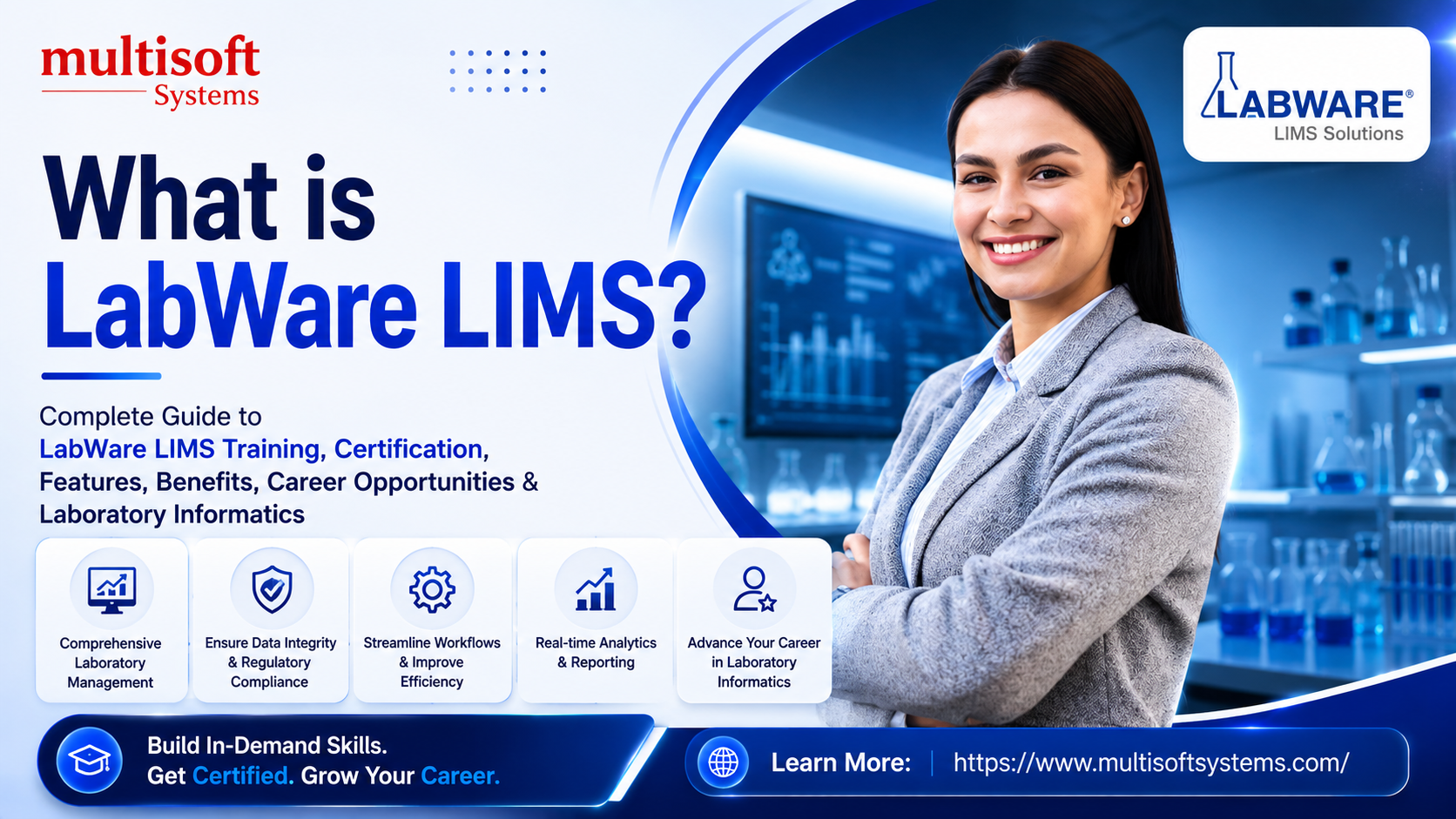
What is LabWare LIMS? Complete Guide to Training, Certification & Career
Laboratories across pharmaceutical, biotechnology, healthcare, food testing, chemical manufacturing, environmental sciences, and research industries generate enormous volumes of analytical data every day. Managing samples, ensuring regulatory compliance, maintaining audit trails, and producing accurate laboratory reports have become increasingly complex. Traditional paper-based systems and spreadsheets can no longer support the demands of modern laboratories. This is where LabWare Laboratory Information Management System (LIMS) becomes an essential enterprise solution. Organizations worldwide rely on LabWare LIMS to automate laboratory operations, improve efficiency, reduce manual errors, strengthen data integrity, and comply with global regulatory standards such as FDA 21 CFR Part 11, GLP, GMP, ISO 17025, and other industry regulations. As digital transformation continues to reshape laboratory environments, professionals with LabWare LIMS expertise are in high demand. Companies seek specialists who can configure workflows, manage laboratory data, integrate analytical instruments, automate reporting, and optimize laboratory operations using LabWare LIMS.
If you are planning to build a career in laboratory informatics or upgrade your technical skills, LabWare LIMS Training provides the practical knowledge required to implement, administer, customize, and support one of the world's leading Laboratory Information Management Systems.
What is LabWare LIMS?
LabWare LIMS (Laboratory Information Management System) Training is a comprehensive software platform designed to automate, manage, and optimize laboratory operations. It enables laboratories to efficiently handle sample tracking, test management, data collection, workflow automation, instrument integration, reporting, and regulatory compliance from a centralized system. Widely used across pharmaceutical, biotechnology, healthcare, food and beverage, environmental, and research laboratories, LabWare LIMS improves operational efficiency by reducing manual processes, enhancing data accuracy, ensuring complete traceability, and supporting compliance with standards such as FDA 21 CFR Part 11, GMP, GLP, and ISO 17025. Its flexible and configurable architecture allows organizations to streamline laboratory workflows, improve productivity, and maintain high-quality laboratory data throughout the testing lifecycle.
Why LabWare LIMS is Important in Modern Laboratories
Today's laboratories handle thousands of samples daily while maintaining strict quality standards and regulatory compliance. Manual laboratory management often leads to challenges such as:
- Sample tracking issues
- Data duplication
- Human errors
- Delayed reporting
- Poor document management
- Regulatory risks
- Limited visibility into laboratory operations
LabWare LIMS addresses these challenges by providing centralized automation across laboratory processes.
Key business benefits include:
- Automated sample lifecycle management
- Improved laboratory productivity
- Reduced manual documentation
- Better data integrity
- Faster turnaround times
- Real-time reporting dashboards
- Complete audit trails
- Instrument connectivity
- Secure user access management
- Compliance with global regulations
These capabilities help organizations reduce operational costs while improving testing accuracy and customer satisfaction.
Core Features of LabWare LIMS
1. Sample Management
Sample Management is one of the most important features of LabWare LIMS. It enables laboratories to efficiently manage the complete lifecycle of a sample, from registration and barcode generation to testing, storage, reporting, and disposal. Every sample is assigned a unique identifier, allowing laboratory personnel to track its status in real time and maintain a complete chain of custody. This feature minimizes sample loss, reduces manual errors, improves traceability, and ensures accurate record-keeping, making laboratory operations more efficient and compliant with regulatory standards.
2. Laboratory Workflow Automation
LabWare LIMS automates routine laboratory processes, eliminating repetitive manual tasks and improving operational efficiency. Laboratories can configure automated workflows for sample routing, test assignments, result verification, approval processes, notifications, and report generation. Workflow automation helps standardize laboratory procedures, reduces turnaround time, minimizes human intervention, and ensures that every process follows predefined quality and compliance guidelines. As a result, laboratories can process more samples while maintaining consistent quality and productivity.
3. Instrument Integration
LabWare LIMS seamlessly integrates with a wide range of laboratory instruments such as HPLC, GC, LC-MS, ICP, UV Spectrometers, analytical balances, and other testing equipment. Instrument integration enables automatic transfer of analytical data into the LIMS without manual entry, reducing transcription errors and improving data accuracy. This capability also accelerates laboratory operations, enhances productivity, and ensures reliable test results while maintaining complete traceability of instrument-generated data.
4. Compliance Management
Compliance Management is a critical feature for laboratories operating in regulated industries such as pharmaceuticals, biotechnology, healthcare, and food testing. LabWare LIMS supports global regulatory requirements including FDA 21 CFR Part 11, GMP, GLP, ISO 17025, and GxP standards. The system provides electronic signatures, audit trails, document control, user authentication, and secure record management to ensure data integrity and regulatory compliance. These capabilities help laboratories successfully prepare for audits, maintain quality standards, and reduce compliance risks.
5. User Security
LabWare LIMS provides robust security features to protect sensitive laboratory data and prevent unauthorized access. It uses role-based access control (RBAC), allowing administrators to assign permissions based on user responsibilities. Features such as secure login, password policies, user authentication, authorization, electronic signatures, and audit logs help maintain data confidentiality and accountability. By ensuring that users only access information relevant to their roles, LabWare strengthens laboratory security while supporting regulatory compliance.
6. Reporting and Analytics
LabWare LIMS offers powerful reporting and analytics capabilities that help laboratories make informed business and operational decisions. Users can generate customized reports, Certificates of Analysis (CoA), quality reports, audit reports, KPI dashboards, trend analyses, and statistical summaries. Real-time dashboards provide visibility into laboratory performance, sample status, instrument utilization, and testing efficiency. These insights enable laboratory managers to monitor productivity, identify bottlenecks, optimize workflows, and support continuous improvement through data-driven decision-making.
Industries Using LabWare LIMS
LabWare LIMS is widely adopted across industries that require accurate laboratory data management, quality control, regulatory compliance, and workflow automation. Major industries include:
- Pharmaceutical Industry - Drug discovery, quality control, manufacturing, stability studies, and regulatory compliance.
- Biotechnology - Biological research, genomics, proteomics, molecular diagnostics, and laboratory data management.
- Healthcare & Clinical Laboratories - Patient sample management, diagnostic testing, pathology, and clinical research.
- Food & Beverage Industry - Food safety testing, quality assurance, microbiological analysis, and regulatory compliance.
- Chemical Industry - Raw material testing, product quality analysis, formulation development, and laboratory automation.
- Environmental Laboratories - Water, air, soil, and wastewater testing for environmental monitoring and compliance.
- Oil & Gas Industry - Petroleum analysis, fuel quality testing, lubricant testing, and refinery laboratory management.
- Manufacturing Industry - Quality control, material testing, production support, and process validation.
- Research & Development (R&D) - Scientific research, product innovation, analytical testing, and experimental data management.
- Cosmetics & Personal Care Industry - Product formulation, quality testing, stability studies, and regulatory documentation.
- Agriculture & Agrochemical Industry - Soil testing, fertilizer analysis, pesticide testing, and agricultural research.
- Academic & Government Laboratories - Scientific research, educational laboratories, public health testing, and forensic investigations.
Who Should Learn LabWare LIMS?
- Laboratory Analysts
- Quality Control (QC) Analysts
- Quality Assurance (QA) Professionals
- Laboratory Managers
- Validation Engineers
- Laboratory Informatics Specialists
- Pharmaceutical Professionals
- Biotechnology Professionals
- Clinical Research Associates (CRAs)
- Microbiologists
- Chemists
- Environmental Scientists
- Food & Beverage Testing Professionals
- Laboratory Technicians
- System Administrators
- LIMS Administrators
- Business Analysts
- Software Developers (Life Sciences)
- Instrument Integration Engineers
- Application Support Engineers
- LIMS Functional Consultants
- LIMS Technical Consultants
- IT Professionals in Healthcare & Pharma
- Fresh Graduates in Life Sciences or IT
- Professionals Looking to Build a Career in Laboratory Informatics
Career Opportunities After LabWare LIMS Training
The growing demand for laboratory automation has created numerous career opportunities for skilled LabWare professionals across pharmaceutical, biotechnology, healthcare, environmental, and manufacturing industries.
Popular job roles include:
- LabWare LIMS Consultant
- LabWare Administrator
- LIMS Functional Consultant
- LIMS Technical Consultant
- Laboratory Informatics Specialist
- Validation Engineer
- Quality Systems Analyst
- Laboratory Automation Engineer
- Business Analyst
- Application Support Engineer
- LIMS Developer
- System Integration Engineer
- Laboratory Data Manager
- Quality Control Systems Specialist
As organizations continue investing in digital laboratories and regulatory compliance, the demand for certified LabWare professionals is expected to grow steadily.
Why Choose LabWare LIMS as a Career?
The laboratory informatics industry is growing rapidly as organizations replace manual processes with intelligent digital laboratory systems. LabWare LIMS is one of the world's leading Laboratory Information Management Systems, trusted by pharmaceutical companies, biotechnology firms, healthcare organizations, food testing laboratories, environmental agencies, and research institutions. As laboratories increasingly adopt automation, cloud technologies, and data-driven operations, the demand for professionals with LabWare LIMS expertise continues to rise. A career in LabWare LIMS offers excellent opportunities in implementation, administration, validation, system integration, laboratory automation, consulting, and technical support. Professionals gain exposure to highly regulated industries while working with cutting-edge technologies that improve laboratory efficiency, compliance, and data integrity. Whether you have a laboratory science or IT background, mastering LabWare LIMS can open doors to global career opportunities with leading multinational organizations.
Benefits of LabWare LIMS Certification
A professional LabWare LIMS certification validates your knowledge and practical skills, making you a stronger candidate in today's competitive job market.
Key benefits include:
- Demonstrates expertise in Laboratory Information Management Systems.
- Enhances career prospects in pharmaceutical, biotech, healthcare, and manufacturing industries.
- Builds practical skills in configuration, workflow automation, reporting, and compliance.
- Improves understanding of FDA, GMP, GLP, ISO 17025, and 21 CFR Part 11 regulations.
- Increases opportunities for implementation, consulting, administration, and support roles.
- Strengthens your professional profile for global employers.
- Helps professionals transition into Laboratory Informatics and Digital Laboratory roles.
- Provides hands-on experience through real-world laboratory scenarios.
Future Trends in Laboratory Informatics
Laboratory Informatics is evolving rapidly as laboratories adopt digital transformation, cloud computing, Artificial Intelligence (AI), Machine Learning (ML), and advanced automation technologies. Modern laboratories are increasingly integrating Laboratory Information Management Systems (LIMS) with Electronic Laboratory Notebooks (ELN), Enterprise Resource Planning (ERP), Manufacturing Execution Systems (MES), and IoT-enabled laboratory instruments to create connected and intelligent laboratory ecosystems. AI-powered analytics, predictive maintenance, automated data validation, and real-time decision-making are transforming how laboratories manage samples, analyze data, and optimize workflows. Additionally, cloud-based LIMS solutions are becoming more popular due to their scalability, enhanced security, remote accessibility, and cost-effectiveness. As regulatory requirements continue to evolve, organizations are also investing in stronger cybersecurity, data integrity, and compliance solutions. These emerging trends are creating significant demand for professionals with expertise in LabWare LIMS and laboratory informatics, making it one of the most promising career domains in the life sciences and laboratory technology industry.
Salary Insights for LabWare LIMS Professionals
LabWare LIMS professionals are highly sought after across pharmaceutical, biotechnology, healthcare, chemical, food, environmental, and research organizations. Salaries vary depending on experience, technical expertise, certifications, industry, and geographic location.
Typical career roles include:
- LabWare LIMS Consultant
- LIMS Developer
- LIMS Administrator
- Laboratory Informatics Specialist
- Validation Engineer
- System Integration Engineer
- Application Support Consultant
- Quality Systems Analyst
- Laboratory Automation Engineer
Experienced consultants working on global implementation projects often receive competitive compensation, attractive benefits, and opportunities to work with multinational organizations. As digital laboratory transformation accelerates, demand for skilled LabWare professionals is expected to remain strong across international markets.
Conclusion
LabWare LIMS has become an essential platform for organizations seeking to modernize laboratory operations, improve regulatory compliance, and enhance data accuracy. As laboratories continue adopting digital technologies, professionals with LabWare LIMS expertise are increasingly valued across pharmaceutical, biotechnology, healthcare, manufacturing, environmental, and research industries. Learning LabWare LIMS not only strengthens your technical and functional skills but also opens opportunities in consulting, implementation, validation, and laboratory informatics.
With comprehensive, hands-on training from Multisoft Systems, you can confidently build the expertise required to manage modern laboratory environments, support digital transformation initiatives, and advance your career in one of the fastest-growing domains within life sciences and laboratory technology.