Riser Analysis using OrcaFlex Online Training Certification Course
Explore practical offshore riser simulation with Riser Analysis using OrcaFlex Training by Multisoft Systems. Learn to configure riser models, apply wave and current conditions, incorporate vessel motions, and conduct static and dynamic assessments. The training emphasizes response evaluation, effective tension, curvature, touchdown behaviour, and simulation interpretation through application-oriented offshore engineering scenarios.
 1K+ Reviews

Instructor-Led Training Parameters
Course Highlights
- Instructor-led Online Training
- Project Based Learning
- Certified & Experienced Trainers
- Course Completion Certificate
- Customized Learning Schedule
- Doubt-Clearing Sessions
Riser Analysis using OrcaFlex Online Training Certification Course Course Overview
Riser Analysis using OrcaFlex Training by Multisoft Systems is designed for engineers and professionals involved in offshore, subsea, marine, and floating production systems who want to understand the modelling and analysis of risers using OrcaFlex. The course introduces the engineering principles governing riser behaviour and demonstrates how these principles can be represented within an OrcaFlex simulation environment.
Participants learn to define riser geometry, structural and hydrodynamic properties, environmental conditions, seabed interaction, vessel motions, boundary conditions, and loading scenarios. The training progresses from model preparation and static equilibrium analysis to dynamic simulations for evaluating riser response under waves, currents, vessel motions, and operational conditions.
Greater emphasis is placed on practical engineering interpretation rather than simply operating the software. Learners explore effective tension, curvature, bending moment, displacement, touchdown behaviour, clearance, stress-related responses, and fatigue considerations. Practical exercises help participants establish a systematic workflow for setting up, checking, running, and interpreting OrcaFlex riser analysis models.
Instructor-led Training Live Online Classes
Suitable batches for you
| Oct, 2026 | Weekdays | Mon-Fri | Enquire Now |
| Weekend | Sat-Sun | Enquire Now | |
| Dec, 2026 | Weekdays | Mon-Fri | Enquire Now |
| Weekend | Sat-Sun | Enquire Now |
Share details to upskills your team
Enquire for Self-Paced Learning
Share your details and our training advisor will connect with you regarding self-paced learning options.
Riser Analysis using OrcaFlex Online Training Certification Course Course curriculum
Curriculum Designed by Experts
Riser Analysis using OrcaFlex Training by Multisoft Systems is designed for engineers and professionals involved in offshore, subsea, marine, and floating production systems who want to understand the modelling and analysis of risers using OrcaFlex. The course introduces the engineering principles governing riser behaviour and demonstrates how these principles can be represented within an OrcaFlex simulation environment.
Participants learn to define riser geometry, structural and hydrodynamic properties, environmental conditions, seabed interaction, vessel motions, boundary conditions, and loading scenarios. The training progresses from model preparation and static equilibrium analysis to dynamic simulations for evaluating riser response under waves, currents, vessel motions, and operational conditions.
Greater emphasis is placed on practical engineering interpretation rather than simply operating the software. Learners explore effective tension, curvature, bending moment, displacement, touchdown behaviour, clearance, stress-related responses, and fatigue considerations. Practical exercises help participants establish a systematic workflow for setting up, checking, running, and interpreting OrcaFlex riser analysis models.
- Understand fundamental engineering principles governing offshore riser behaviour.
- Configure different riser systems within OrcaFlex.
- Define structural, hydrodynamic, environmental, and boundary-condition inputs.
- Perform static and dynamic riser simulations.
- Analyze the influence of waves, currents, vessel motions, and offsets.
- Evaluate tension, curvature, bending response, displacement, and touchdown behaviour.
- Understand fatigue-related response considerations.
- Perform sensitivity studies across different operating and environmental conditions.
- Identify critical locations and governing load cases.
- Interpret OrcaFlex outputs for offshore engineering assessments.
Course Prerequisite
- Basic understanding of offshore or subsea engineering.
- Familiarity with engineering mechanics and structural behaviour.
- Basic knowledge of offshore waves, currents, and environmental loading.
- Understanding of pipeline or riser engineering concepts is beneficial.
- Exposure to offshore structures or floating systems is helpful.
- Prior OrcaFlex experience is useful but not mandatory for professionals beginning with riser simulation.
Course Target Audience
- Offshore Engineers
- Subsea Engineers
- Riser Engineers
- Pipeline Engineers
- Marine Engineers
- Structural Engineers working on offshore systems
- Installation Engineers
- Offshore Design Engineers
- Flexible Pipeline/Riser Engineers
- Naval Architecture professionals
- Oil & Gas engineering professionals
- Engineering consultants involved in offshore analysis
Course Content
- Overview of offshore production systems
- Role of risers in offshore field architecture
- Riser functions and operating environments
- Fundamentals of riser analysis
- Static versus dynamic riser behaviour
- Key riser design and analysis considerations
- Introduction to numerical modelling of offshore risers
 DOWNLOAD CURRICULUM
- Flexible and rigid risers
- Steel catenary risers (SCR)
- Lazy wave and steep wave configurations
- Free-hanging catenary configurations
- Top tensioned risers
- Hybrid riser concepts
- Riser geometry and configuration selection
- Touchdown zone and touchdown point concepts
- Effective tension and bending behaviour
- Interaction between riser configuration and environmental loading
DOWNLOAD CURRICULUM
- OrcaFlex interface and modelling environment
- Understanding the OrcaFlex model hierarchy
- Model data and object configuration
- Units and coordinate systems
- Introduction to line objects
- Vessel and buoy objects
- Environment definition
- Model visualization and checking
- Static and dynamic calculation workflow
- Saving and managing simulation models
- Reviewing model warnings and calculation status
DOWNLOAD CURRICULUM
- Creating riser line models
- Defining riser end connections
- Specifying line length and segmentation
- Line sections and discretization
- Selecting appropriate segment lengths
- Initial riser configuration
- End constraints and boundary conditions
- Connection to vessel or floating structure
- Seabed and touchdown modelling
- Riser configuration checks
- Mesh sensitivity considerations
- Model refinement techniques
DOWNLOAD CURRICULUM
- Structural properties of risers
- Mass per unit length
- Outside and inside diameter
- Axial stiffness
- Bending stiffness
- Torsional stiffness considerations
- Riser contents and internal fluid properties
- Buoyancy effects
- Hydrodynamic diameter
- Drag coefficients
- Added mass coefficients
- Marine growth considerations
- Buoyancy modules and distributed buoyancy
- Property variation along the riser
- Understanding the influence of riser properties on response
DOWNLOAD CURRICULUM
- Offshore environmental loading concepts
- Water depth and seabed definition
- Current profiles
- Current direction and variation with depth
- Wave definition
- Regular and irregular waves
- Wave spectra concepts
- Wave direction and spreading considerations
- Wind loading considerations
- Hydrodynamic loading on risers
- Drag and inertia forces
- Combined wave and current conditions
- Environmental load combinations
- Selection of representative operating and extreme conditions
DOWNLOAD CURRICULUM
- Purpose of static analysis
- Establishing static equilibrium
- Static solver considerations
- Riser catenary response
- Static effective tension
- Static curvature
- Bend moment response
- Riser position and geometry
- Touchdown point identification
- Touchdown zone behaviour
- Top tension assessment
- Clearance evaluation
- Static load-case comparison
- Diagnosing static convergence issues
- Interpreting static analysis results
DOWNLOAD CURRICULUM
- Fundamentals of time-domain dynamic analysis
- Dynamic simulation setup
- Simulation stages and duration
- Time-step considerations
- Vessel motion inputs
- Wave-induced riser response
- Dynamic tension variation
- Dynamic bending response
- Curvature response
- Riser displacement and motion
- Touchdown zone dynamics
- Transient response considerations
- Identifying peak response events
- Time-history results
- Statistical result evaluation
- Dynamic load-case comparison
- Simulation stability and convergence considerations
DOWNLOAD CURRICULUM
- Modelling vessel connection
- Vessel position and orientation
- Vessel offset conditions
- Prescribed vessel motion
- RAO concepts and applications
- Translational and rotational vessel response
- Wave-frequency vessel motions
- Low-frequency motion considerations
- Riser response to vessel excursions
- Near and far offset cases
- Top connection response
- Influence of vessel motion on riser tension and curvature
DOWNLOAD CURRICULUM
- Identifying critical riser response parameters
- Effective tension assessment
- Maximum and minimum tension
- Compression identification
- Bending moment evaluation
- Curvature assessment
- Bend radius considerations
- Top connection response
- Touchdown zone response
- Clearance assessment
- Contact with seabed
- Identifying critical locations along the riser
- Reviewing maximum and minimum values
- Range graphs and time histories
- Extracting engineering results from OrcaFlex
- Comparing results across load cases
DOWNLOAD CURRICULUM
- Introduction to riser fatigue
- Sources of cyclic loading
- Wave-induced fatigue considerations
- Vessel-motion-induced fatigue
- Fatigue-sensitive riser locations
- Stress range concepts
- Fatigue load-case considerations
- Introduction to vortex-induced vibration (VIV)
- Current-driven VIV behaviour
- VIV-sensitive regions of a riser
- Understanding the relationship between VIV and fatigue
- Extreme environmental response
- Extreme tension and curvature assessment
- Identifying governing response conditions
- Limitations and assumptions in fatigue and VIV assessments
DOWNLOAD CURRICULUM
Advanced Riser Analysis
- Complex riser configurations
- Buoyancy-supported riser systems
- Multiple line sections
- Nonlinear riser behaviour
- Seabed interaction considerations
- Contact and clearance scenarios
- Riser interference awareness
Sensitivity Studies
- Water-depth sensitivity
- Vessel-offset sensitivity
- Current-speed sensitivity
- Wave-condition sensitivity
- Riser-property sensitivity
- Drag coefficient sensitivity
- Buoyancy sensitivity
- Segmentation and discretization sensitivity
- Comparing sensitivity cases
Results Interpretation
- Reviewing simulation outputs systematically
- Time histories
- Range graphs
- Summary statistics
- Identifying maximum response
- Locating critical regions
- Comparing static and dynamic results
- Recognizing unrealistic model behaviour
- Engineering interpretation of OrcaFlex outputs
- Preparing analysis results for technical reporting
Practical Case Study
- Defining an offshore riser analysis problem
- Establishing model geometry
- Configuring riser properties
- Defining vessel and connection conditions
- Setting seabed and environmental data
- Running static analysis
- Checking equilibrium and model behaviour
- Configuring dynamic simulation
- Running representative environmental load cases
- Reviewing tension, curvature, displacement, and touchdown response
- Performing selected sensitivity cases
- Identifying critical response locations
- Comparing simulation cases
- Summarizing engineering observations
- Preparing a structured analysis report
DOWNLOAD CURRICULUM
Request for Enquiry
Explore Course Resources
Strengthen your learning with useful resources designed to help you prepare, practice, and evaluate your understanding.
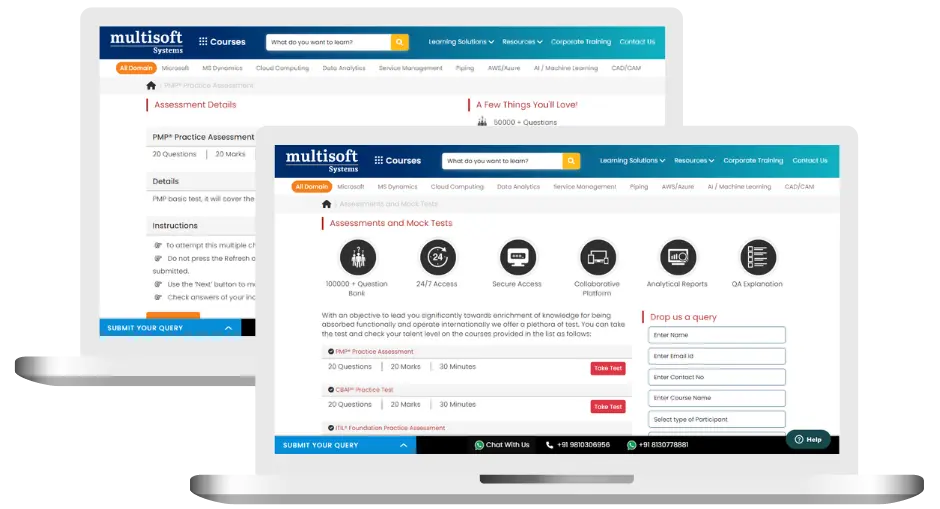
Riser Analysis using OrcaFlex Training (MCQ) Assessment
This assessment tests understanding of course content through MCQ and short answers, analytical thinking, problem-solving abilities, and effective communication of ideas. Some Multisoft Assessment Features :
- User-friendly interface for easy navigation
- Secure login and authentication measures to protect data
- Automated scoring and grading to save time
- Time limits and countdown timers to manage duration.
Riser Analysis using OrcaFlex Corporate Training
Employee training and development programs are essential to the success of businesses worldwide. With our best-in-class corporate trainings you can enhance employee productivity and increase efficiency of your organization. Created by global subject matter experts, we offer highest quality content that are tailored to match your company’s learning goals and budget.
Global Clients



Customized Training
Be it schedule, duration or course material, you can entirely customize the trainings depending on the learning requirements
Expert
Mentors
Be it schedule, duration or course material, you can entirely customize the trainings depending on the learning requirements
360º Learning Solution
Be it schedule, duration or course material, you can entirely customize the trainings depending on the learning requirements
Learning Assessment
Be it schedule, duration or course material, you can entirely customize the trainings depending on the learning requirements
Why Riser Analysis using OrcaFlex Online Training Certification Course for Your Professional Growth
Strengthen your professional capabilities with practical learning, industry-relevant knowledge, and skills applicable to real-world business and technology environments.
Industry-Relevant Skills
Gain knowledge aligned with current industry practices, technologies, processes, and professional requirements.
Practical Learning
Understand concepts through practical scenarios, instructor-led discussions, exercises, and use cases.
Enhanced Professional Capability
Strengthen your ability to work confidently with relevant tools, workflows, platforms, and business processes.
Broader Career Opportunities
Add valuable capabilities to your profile and explore opportunities across relevant roles, projects, and industries.
Adapt to Changing Technologies
Stay familiar with evolving technologies, methodologies, and practices shaping modern enterprise environments.
Professional Recognition
Demonstrate your training achievement with a course completion certificate from Multisoft Systems.
 Zoom-in
Certification Training Achievements: Recognizing Professional Expertise
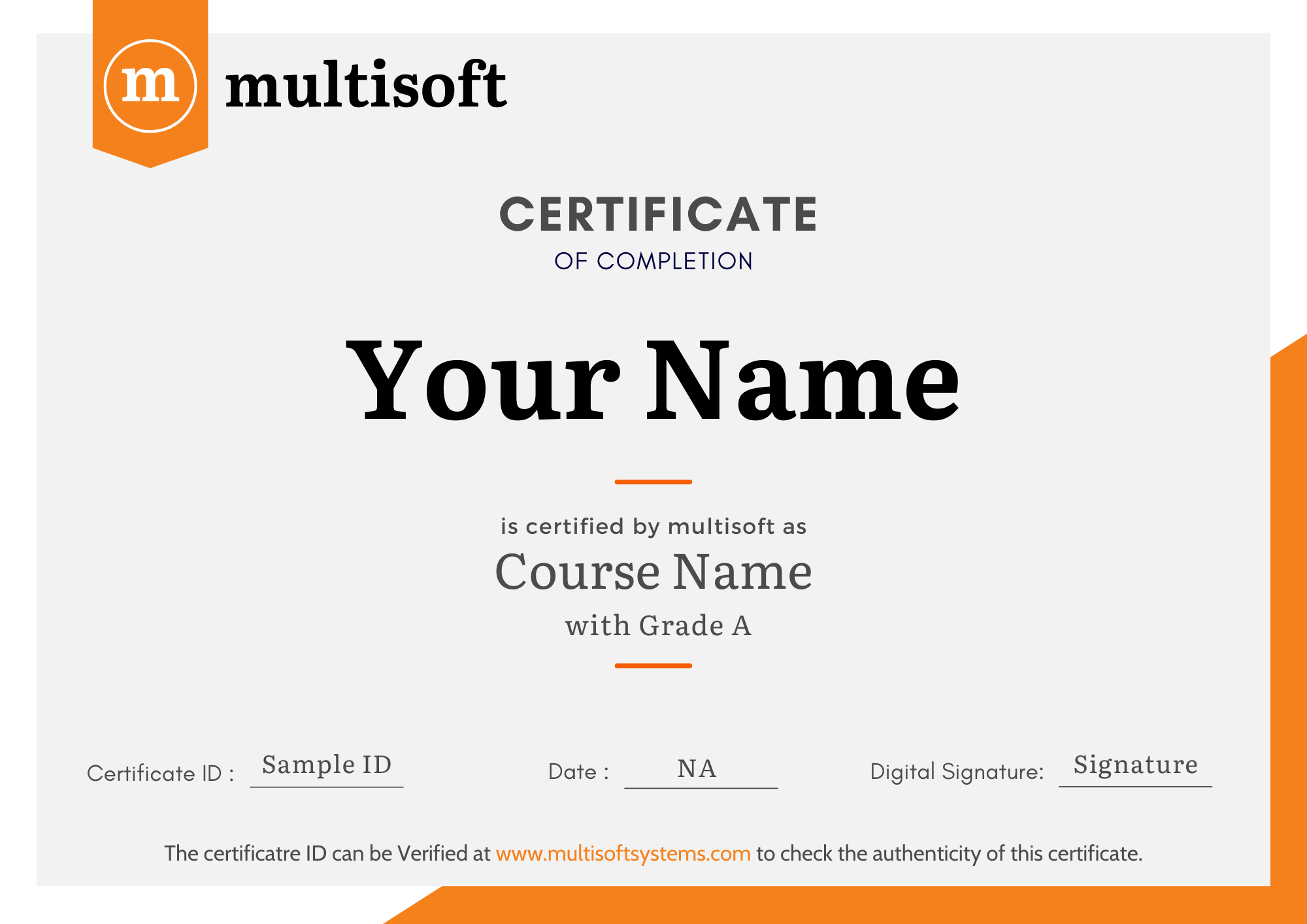
Multisoft Systems is the “one-top learning platform” for everyone. Get trained with certified industry experts and receive a globally-recognized training certificate. Some Multisoft Training Certificate Features :
- Globally recognized certificate
- Course ID & Course Name
- Certificate with Date of Issuance
- Name and Digital Signature of the Awardee
Trending Courses
Why Learners Choose Multisoft Systems
Compare key training features and see how Multisoft Systems focuses on structured learning, practical understanding, and learner support.
Training Features That Matter
Evaluate the learning experience across important areas before selecting a training program.
Instructor-Led Learning
Structured sessions guided by experienced trainers.
Practical Learning
Hands-on exposure that supports concept understanding.
Flexible Learning Options
Learning formats designed around different schedules.
Learner Support
Assistance throughout the training journey.
Learning Resources
Resources that support revision and continued learning.
Training Certificate
Recognition after successful course completion.
Choose Training That Goes Beyond Theory
Multisoft Systems combines guided learning, practical exposure, flexible delivery, learner support, and structured resources to create a more complete training experience.

SAP SuccessFactors Implementing SmartRecruiters Training: A Complete Guide
Modern recruitment requires businesses to find suitable candidates quickly and... Read Article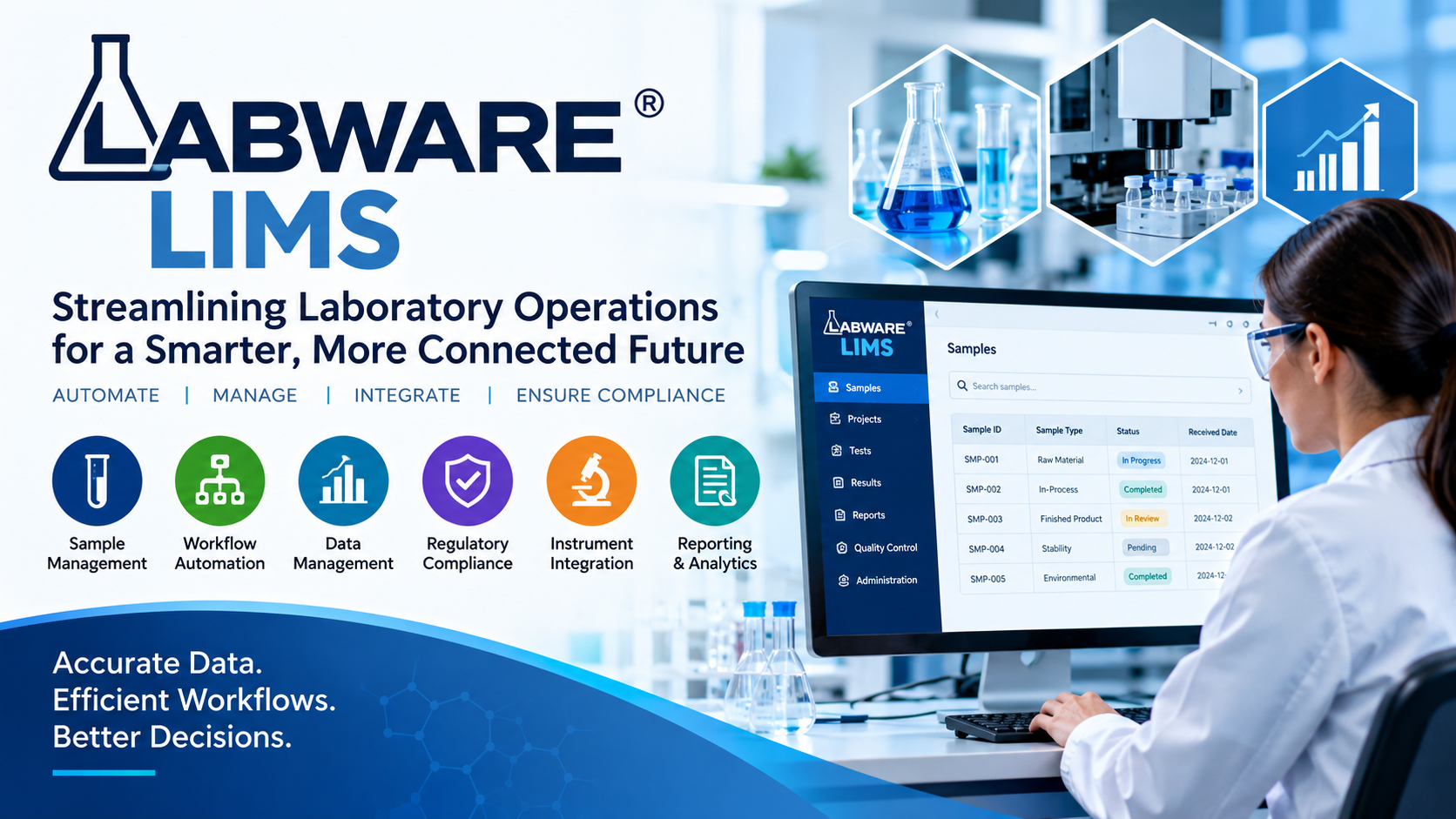
LabWare LIMS: Features, Benefits, Applications & Training
Modern laboratories operate in an environment where accuracy, efficiency, traceability,... Read Article
What Is SAP Convergent Invoicing? Features, Processes, and Business Applications
Managing invoices accurately becomes challenging when businesses handle subscriptions, usage-based... Read Article
SAP SuccessFactors Recruiting: Features, Processes, and Career Opportunities
Recruiting the right talent is essential for business growth, but... Read ArticleRiser Analysis using OrcaFlex Online Training Certification Course Trainer Profile
19+ Years Experienced
Our Riser Analysis using OrcaFlex Corporate & Certification Program trainers bring 13+ years of proven industry expertise, delivering practical insights aligned with real project environments.
Trained 3950+ Professionals
Our expert trainers have successfully trained 3350+ professionals through structured, real-time training programs designed for industry readiness and career growth.
Certified Experts & Real-Time Project Learning
Build strong practical skills through live project-based training sessions led by certified industry experts with real-world experience.
Hands-on Learning Approach
Gain practical exposure through real-time scenarios, industry case studies, and hands-on assignments that simulate actual project challenges.
Certification Training Guidance
Receive expert support to prepare effectively, practice strategically, and confidently achieve globally recognized certification success.
Customized Training Delivery
Flexible training approach tailored to individual learning goals, skill levels, and evolving industry requirements for maximum effectiveness.
Riser Analysis using OrcaFlex Online Training Certification Course FAQ's
Riser Analysis using OrcaFlex Training is a specialized program focused on modelling and evaluating offshore riser systems using OrcaFlex. It covers riser configurations, environmental loading, static and dynamic analysis, vessel interaction, touchdown behaviour, and engineering interpretation of simulation results.
What Attendees are Saying
Our clients love working with us! They appreciate our expertise, excellent communication, and exceptional results. Trustworthy partners for business success.
Share Feedback