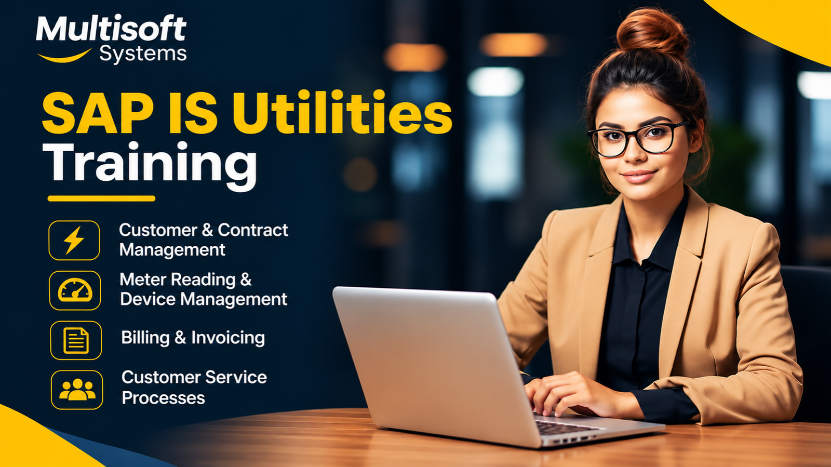
The energy and utilities industry is experiencing major changes due to digital transformation, smart metering, renewable energy adoption and increasing customer expectations. Electricity, gas and water service providers need reliable systems to manage customer accounts, meter readings, billing, payments and service operations. Traditional business processes are gradually moving towards integrated digital platforms that offer better data visibility and operational control.
SAP IS Utilities is an industry-specific SAP solution designed to support the business operations of utility companies. It helps organisations manage important processes across the customer and meter-to-cash lifecycle. As utilities continue to modernise their systems, professionals with knowledge of SAP utilities processes are becoming valuable to implementation and support teams.
SAP IS Utilities Training helps learners understand the functional processes, system configuration concepts and business workflows used in the utilities sector. It can be a useful learning path for SAP consultants, business analysts and professionals interested in energy and utility management.
What Is SAP IS Utilities?
SAP IS Utilities, also known as SAP IS-U (Industry Solution for Utilities), is an SAP solution designed to manage the business operations of electricity, gas and water service providers. It helps utility companies handle customer accounts, service contracts, meter readings, consumption data, billing and payment processes through an integrated system. By connecting these activities, SAP IS-U supports efficient management of the complete meter-to-cash process, from customer registration and consumption recording to bill generation and payment collection.
Key features and functional areas of SAP IS Utilities include:
- Business Partner Management: Maintains customer details and business partner information.
- Contract Management: Manages utility service agreements and customer contracts.
- Device Management: Handles the administration of meters and other utility devices.
- Meter Reading: Supports scheduled and on-demand meter reading activities.
- Energy Data Management: Processes utility consumption data and related information.
- Billing: Calculates charges based on consumption, tariffs and applicable business rules.
- Invoicing: Generates customer invoices for electricity, gas and water services.
- Payment Management: Manages customer payments, outstanding balances and receivables.
- Move-In and Move-Out: Handles customer changes at utility service locations.
- Customer Service: Supports customer enquiries and account-related activities.
Why Is SAP IS Utilities Important for the Utilities Industry?
Utility companies manage large volumes of customer information, service contracts, meter readings, consumption records and billing transactions. Handling these activities through disconnected systems can lead to data inconsistencies, delays and operational challenges. SAP IS Utilities helps organisations bring essential business processes together within an integrated platform. It supports accurate meter reading, consumption management, billing and payment processing while improving coordination between different departments. The solution also helps utility providers manage customer accounts, monitor service-related activities and handle complex pricing requirements. As the industry adopts smart metering, digital services and modern energy management practices, SAP IS Utilities knowledge is becoming increasingly relevant for professionals involved in utility operations and digital transformation.
Latest Trends Shaping SAP IS Utilities and the Energy Sector
The energy and utilities industry is adopting new technologies to improve service quality, manage resources and simplify daily operations. SAP IS Utilities is part of this digital transformation as utility companies look for better ways to manage customer information, meter readings, billing and energy consumption. Several important trends are influencing how utility businesses use SAP solutions.
1. Migration to SAP S/4HANA Utilities
Many utility companies are moving from older SAP systems towards SAP S/4HANA to modernise their business operations. This transition helps organisations review existing processes, improve data management and build a more integrated technology environment. Knowledge of SAP IS-U concepts can help professionals understand these changing system requirements.
2. Smart Metering and Digital Meter Management
Smart meters are changing how electricity and gas consumption is recorded. These devices can send consumption information automatically, reducing the need for traditional manual readings. Utility companies use this data to improve billing accuracy and monitor consumption patterns. SAP utilities processes support the management and processing of meter-related information.
3. Cloud Technology and System Integration
Utility companies use different applications to manage customers, billing, payments and field operations. Cloud technology and system integration help connect these applications and improve information sharing. This allows organisations to manage business activities more efficiently and maintain consistent data across systems.
4. Artificial Intelligence and Automation
Artificial intelligence is creating new opportunities for utility companies to improve customer support, analyse data and automate repetitive tasks. AI-based tools can help identify patterns in consumption information and support business decisions. These developments are encouraging SAP professionals to understand how automation and AI can complement existing utility processes.
5. Renewable Energy and Sustainable Operations
The growing use of solar power, wind energy and other renewable sources is changing the energy industry. Utility companies need to manage new energy requirements, changing consumption patterns and distributed energy resources. Digital solutions help organisations handle information and coordinate their operations as the energy sector moves towards more sustainable practices.
6. Better Customer Experience and Digital Services
Customers now expect easy access to their utility accounts, bills, payments and service information. Many utility providers are improving their online services and customer support systems. SAP utilities solutions help manage important customer-related processes and support better coordination between service teams.
Key Features and Business Applications
- Customer Master Data Management
- Contract Management
- Device Management
- Meter Reading Management
- Energy Data Management
- Tariff Management
- Billing Management
- Invoicing
- Payment Processing
- Move-In and Move-Out Management
- Customer Service Management
- Meter-to-Cash Process
- Market Communication
- Business Process Integration
What Will You Learn in an SAP IS Utilities Course?
- Introduction to SAP IS Utilities
- SAP IS-U Architecture and Navigation
- Business Partner Management
- Customer Master Data Management
- Technical Master Data
- Premise and Installation Management
- Device Management
- Meter Reading Processes
- Energy Data Management
- Rate and Tariff Configuration
- Billing and Invoicing Processes
- Contract Accounts Management
- Payment Processing
- Move-In and Move-Out Processes
- Customer Service Operations
- Integration with Other SAP Modules
- Practical Utility Business Scenarios
Who Should Enrol in SAP IS Utilities Training?
SAP IS Utilities Training can be useful for professionals who want to develop knowledge of SAP-based utility operations.
It is particularly relevant for:
- SAP IS-U Functional Consultants.
- SAP S/4HANA Utilities Consultants.
- SAP Business Analysts.
- Utility Industry Professionals.
- Electricity and Gas Sector Employees.
- Billing and Metering Specialists.
- Customer Service Professionals.
- SAP Support Consultants.
- ERP Implementation Professionals.
- IT Professionals interested in SAP utilities.
- Engineering and Management Graduates.
Professionals with experience in SAP ERP, finance, customer service or utility operations may find it easier to connect the course concepts with practical business requirements. Beginners can also start by learning the fundamentals of the utilities industry and SAP processes.
Benefits of SAP IS Utilities Training Online
Choosing SAP IS Utilities Training Online gives learners the flexibility to develop relevant skills without attending a physical classroom. Working professionals can participate in training sessions while managing their existing job responsibilities.
Online learning also makes it possible to interact with trainers, discuss functional concepts and understand different business scenarios. Depending on the programme, learners may receive practical demonstrations, course materials and recorded sessions for revision.
Key learning benefits include:
- Flexible learning from different locations.
- Live interaction with experienced trainers.
- Better understanding of utility business workflows.
- Exposure to SAP functional concepts.
- Opportunities to discuss practical scenarios.
- Learning support for working professionals.
- Access to digital study resources, depending on the programme.
A structured online course can help learners build a foundation before moving into project-based SAP roles.
SAP IS Utilities Certification and Career Opportunities
SAP IS Utilities knowledge can support career development in the SAP consulting and utility technology sectors. Organisations implementing, maintaining or upgrading SAP utilities solutions may require professionals who understand customer management, device processes, metering and billing.
An SAP IS Utilities Certification or training completion certificate can help demonstrate learning and subject knowledge. However, learners should check whether a programme offers an official SAP certification examination or a training provider's course completion certificate, as these are not the same.
Potential career paths include:
- SAP IS-U Functional Consultant.
- SAP Utilities Consultant.
- SAP S/4HANA Utilities Consultant.
- SAP Billing Consultant.
- SAP Metering Consultant.
- SAP Customer Service Consultant.
- SAP Business Process Analyst.
- SAP Application Support Consultant.
- SAP Implementation Consultant.
- Utilities Business Analyst.
Career opportunities depend on practical knowledge, project exposure, overall SAP experience and employer requirements. Developing an understanding of related SAP modules and integration processes can also strengthen a professional profile.
How to Choose the Right SAP IS Utilities Course?
Selecting the right training programme is an important step for anyone planning to build a career in SAP utilities.
Before enrolling, learners should review the course structure and check whether it covers the business processes they want to understand.
Consider these factors:
- Course Coverage: Check whether the syllabus includes master data, metering, billing and contract accounts.
- Trainer Experience: Look for trainers with relevant SAP knowledge and practical industry exposure.
- Practical Learning: Prefer programmes that explain business scenarios and system workflows.
- Training Format: Choose between live online, one-on-one and corporate training based on your needs.
- Learning Resources: Review the availability of study materials and recorded sessions.
- Certification Details: Confirm whether the programme provides a completion certificate or prepares learners for an official certification exam.
- Post-Training Support: Understand what guidance is available after the sessions.
A suitable SAP IS Utilities Course should provide a clear understanding of the solution and its role in utility business operations.
Why Choose Multisoft Systems for SAP IS Utilities Training?
Multisoft Systems offers professional SAP IS Utilities Training designed to help learners understand utility business processes and SAP functional concepts. The programme focuses on important areas such as customer management, device management, meter reading, billing and invoicing. Learners can choose suitable training options based on their professional goals and learning requirements. With structured sessions and expert guidance, participants can build their knowledge of SAP utilities and understand its applications in the energy and utilities industry.
Key Highlights:
- Live Instructor-Led Online Training
- Experienced Subject Matter Experts
- One-on-One Training Options
- Practical Learning and Business Scenarios
- Flexible Training Schedules
- Corporate Training Solutions
- Recorded Session Access, Depending on the Programme
- Post-Training Learning Support
- Course Completion Certification
Conclusion
The utilities industry is moving towards smarter, more connected and data-driven operations. Digital transformation, smart metering, cloud integration, AI and renewable energy are influencing how utility companies manage their business processes.
SAP IS Utilities remains an important area of knowledge for professionals interested in customer management, metering, billing and other utility operations. Learning these processes can help individuals understand the business requirements behind SAP utilities implementations and support projects involving utility service providers.
SAP IS Utilities Training offers a structured way to build this knowledge. With the right course, practical learning approach and continued skill development, professionals can prepare themselves for opportunities in the evolving SAP and utilities landscape.
Frequently Asked Questions (FAQs)
1. What is SAP IS Utilities used for?
SAP IS Utilities is used by utility companies to manage business processes such as customer accounts, contracts, device management, meter reading, billing, invoicing and payments.
2. Who can learn SAP IS Utilities?
SAP consultants, business analysts, utility professionals, billing specialists, IT professionals and graduates interested in SAP utilities can consider this training.
3. What topics are covered in an SAP IS Utilities Course?
A typical course covers customer master data, technical master data, device management, meter reading, energy data, billing, invoicing and contract accounts.
4. Is SAP IS Utilities Training Online suitable for working professionals?
Yes. Online training can offer flexible schedules, instructor interaction and digital learning resources, depending on the programme.
5. What is the difference between SAP IS-U and SAP S/4HANA Utilities?
SAP IS-U refers to the industry solution for utilities, while SAP S/4HANA Utilities provides utilities-specific capabilities within the SAP S/4HANA product environment. The exact features and migration considerations depend on the system version and implementation.
6. Does SAP IS Utilities Training provide certification?
Training providers may issue a course completion certificate. An official SAP certification is a separate credential and requires meeting the applicable SAP examination requirements.
7. What career opportunities are available after SAP IS Utilities Training?
Related roles include SAP IS-U Functional Consultant, SAP Utilities Consultant, SAP Billing Consultant, SAP Support Consultant and Utilities Business Analyst. Requirements vary by employer and project.