API 579-1/ASME FFS-1 Fitness-For-Service Training
Gain practical asset integrity expertise with API 579-1/ASME FFS-1 Fitness-for-Service Training covering assessment procedures, corrosion, pitting, cracking, metal loss, remaining strength, fracture mechanics and structural integrity evaluation. Develop hands-on skills to determine equipment fitness for continued service, support informed inspection decisions and improve the safety and reliability of pressure equipment.
 1K+ Reviews
Instructor-Led Training Parameters
Course Highlights
- Instructor-led Online Training
- Project Based Learning
- Certified & Experienced Trainers
- Course Completion Certificate
- Customized Learning Schedule
- Doubt-Clearing Sessions
API 579-1/ASME FFS-1 Fitness-For-Service Training Course Overview
Enroll in Multisoft Systems’ API 579-1/ASME FFS-1 Fitness-For-Service training to master industry-standard methods for evaluating structural integrity and remaining life of pressure equipment. Learn damage assessment techniques, failure prevention strategies, and compliance requirements through expert-led sessions, practical examples, and real-world applications to enhance reliability, safety, and operational performance in industrial facilities.
API 579-1/ASME FFS-1 Fitness-For-Service training by Multisoft Systems is designed to equip professionals with the knowledge and practical skills required to assess the structural integrity and remaining life of pressure equipment. This globally recognized standard provides engineering procedures for evaluating equipment that contains flaws or damage, helping organizations make informed decisions about repair, replacement, or continued operation. This training covers the fundamentals of Fitness-For-Service methodology, including damage mechanisms, flaw assessment techniques, and assessment levels such as Level 1, Level 2, and Level 3 evaluations. Participants will learn how to evaluate common damage types such as corrosion, cracks, dents, and distortion using industry-approved assessment procedures. The course also explains how to interpret inspection data and apply acceptance criteria to ensure equipment reliability and safety.
Through expert-led sessions and practical examples, learners gain the ability to perform integrity assessments, reduce downtime, and extend equipment service life. This training is highly beneficial for inspection engineers, mechanical engineers, reliability engineers, and maintenance professionals working in oil and gas, petrochemical, power, and process industries seeking compliance with international safety standards.
Instructor-led Training Live Online Classes
Suitable batches for you
| Oct, 2026 | Weekdays | Mon-Fri | Enquire Now |
| Weekend | Sat-Sun | Enquire Now | |
| Nov, 2026 | Weekdays | Mon-Fri | Enquire Now |
| Weekend | Sat-Sun | Enquire Now |
Share details to upskills your team
Enquire for Self-Paced Learning
Share your details and our training advisor will connect with you regarding self-paced learning options.
API 579-1/ASME FFS-1 Fitness-For-Service Training Course curriculum
Curriculum Designed by Experts
Enroll in Multisoft Systems’ API 579-1/ASME FFS-1 Fitness-For-Service training to master industry-standard methods for evaluating structural integrity and remaining life of pressure equipment. Learn damage assessment techniques, failure prevention strategies, and compliance requirements through expert-led sessions, practical examples, and real-world applications to enhance reliability, safety, and operational performance in industrial facilities.
API 579-1/ASME FFS-1 Fitness-For-Service training by Multisoft Systems is designed to equip professionals with the knowledge and practical skills required to assess the structural integrity and remaining life of pressure equipment. This globally recognized standard provides engineering procedures for evaluating equipment that contains flaws or damage, helping organizations make informed decisions about repair, replacement, or continued operation. This training covers the fundamentals of Fitness-For-Service methodology, including damage mechanisms, flaw assessment techniques, and assessment levels such as Level 1, Level 2, and Level 3 evaluations. Participants will learn how to evaluate common damage types such as corrosion, cracks, dents, and distortion using industry-approved assessment procedures. The course also explains how to interpret inspection data and apply acceptance criteria to ensure equipment reliability and safety.
Through expert-led sessions and practical examples, learners gain the ability to perform integrity assessments, reduce downtime, and extend equipment service life. This training is highly beneficial for inspection engineers, mechanical engineers, reliability engineers, and maintenance professionals working in oil and gas, petrochemical, power, and process industries seeking compliance with international safety standards.
- Understand the purpose, scope, and structure of API 579-1/ASME FFS-1 Fitness-For-Service standard.
- Learn the principles of Fitness-For-Service assessment and its role in ensuring equipment integrity.
- Identify and evaluate common damage mechanisms such as corrosion, cracking, dents, and distortion.
- Gain knowledge of Level 1, Level 2, and Level 3 assessment procedures and their applications.
- Develop the ability to interpret inspection data for integrity and remaining life evaluation.
- Learn how to determine the acceptability of damaged pressure vessels, piping, and tanks.
- Understand procedures for calculating remaining strength and remaining service life.
- Apply FFS assessment methods to support repair, replacement, or continued operation decisions.
- Improve plant safety, reliability, and operational efficiency through proper integrity assessments.
- Ensure compliance with international codes and standards used in process industries.
- Enhance engineering decision-making skills related to asset integrity management.
Course Prerequisite
- Basic understanding of pressure vessels, piping systems, or industrial equipment
- Fundamental knowledge of mechanical engineering concepts and material behavior
- Familiarity with engineering drawings and technical documentation
Course Target Audience
- Mechanical Engineers
- Inspection Engineers
- Maintenance Engineers
- Plant Engineers
- Piping Engineers
- Quality Assurance and Quality Control (QA/QC) Engineers
- NDT (Non-Destructive Testing) Professionals
- API Inspectors (API 510, API 570, API 653)
- Design Engineers working with pressure equipment
- Technical Consultants in oil, gas, petrochemical, and power industries
Course Content
- Overview of Fitness-For-Service Philosophy
- Purpose and Benefits of FFS Assessments
- Scope and Limitations of API 579-1 / ASME FFS-1
- Difference Between FFS and Design-by-Rule
- Typical Equipment Covered (Pressure Vessels, Piping, Tanks)
- When and Why FFS Assessments Are Required?
 DOWNLOAD CURRICULUM
- Structure of the API 579-1 / ASME FFS-1 Standard
- Overview of Parts 1 to 14
- Assessment Levels – Level 1, Level 2, and Level 3
- Inputs Required for an FFS Assessment
- Inspection Data and Damage Characterization
- Documentation and Reporting Requirements
DOWNLOAD CURRICULUM
- Understanding Brittle Fracture Mechanisms
- Material Toughness and Temperature Effects
- Minimum Safe Operating Temperature (MSOT)
- Level 1 Brittle Fracture Assessment Procedure
- Level 2 Brittle Fracture Assessment Overview
- Practical Examples and Case Discussions
DOWNLOAD CURRICULUM
- Causes of General Metal Loss (Corrosion, Erosion)
- Inspection Methods for Thickness Measurement
- Remaining Strength Factor (RSF) Concept
- Level 1 General Metal Loss Assessment
- Level 2 General Metal Loss Assessment
- Acceptance Criteria and Remaining Life Estimation
DOWNLOAD CURRICULUM
- Identification of Localized Corrosion
- Difference Between General and Local Metal Loss
- Data Requirements for Local Metal Loss
- Level 1 Assessment Procedure
- Level 2 Assessment Procedure
- Case Studies and Engineering Examples
DOWNLOAD CURRICULUM
- Characteristics of Pitting Corrosion
- Measurement and Pit Density Evaluation
- Pit Depth and Diameter Considerations
- Level 1 Pitting Assessment
- Level 2 Pitting Assessment
- Practical Applications and Examples
DOWNLOAD CURRICULUM
- Types of Crack-Like Flaws
- Introduction to Fracture Mechanics Concepts
- Stress Intensity Factor (K) Fundamentals
- Level 1 Crack-Like Flaw Assessment
- Level 2 Crack-Like Flaw Assessment
- Engineering Examples and Problem Solving
DOWNLOAD CURRICULUM
- Overview of Hydrogen Damage Mechanisms
- Hydrogen Blistering
- Hydrogen-Induced Cracking (HIC)
- Stress-Oriented Hydrogen-Induced Cracking (SOHIC)
- Inspection and Damage Identification
- Acceptance Criteria and Assessment Guidance
DOWNLOAD CURRICULUM
- Types of Weld Misalignment
- Shell Distortions and Out-of-Roundness
- Causes and Impact on Structural Integrity
- Inspection and Measurement Techniques
- Assessment Methodology per API 579-1
- Practical Evaluation Examples
DOWNLOAD CURRICULUM
- Fundamentals of Creep Damage
- Materials Susceptible to Creep
- Operating Conditions Influencing Creep
- Creep Damage Identification
- Remaining Life Estimation
- Assessment Examples
DOWNLOAD CURRICULUM
- Effects of Fire Exposure on Materials
- Identification of Fire Damage
- Metallurgical Changes Due to Fire
- Inspection and Data Collection
- Fitness-For-Service Evaluation Approach
- Case Discussions
DOWNLOAD CURRICULUM
- Types of Mechanical Damage
- Dent Severity and Shape Considerations
- Gouges and Dent-Gouge Combinations
- Inspection Requirements
- Assessment and Acceptance Criteria
- Engineering Examples
DOWNLOAD CURRICULUM
- Causes of Material Laminations
- Detection Methods
- Classification of Laminations
- Structural Impact Evaluation
- Assessment Procedures
DOWNLOAD CURRICULUM
- End-to-End FFS Assessment Workflow
- Multi-Damage Scenario Evaluations
- Selection of Appropriate Assessment Levels
- Interpretation of Results
- Decision-Making: Repair, Monitor, or Replace
- Course Wrap-Up and Key Takeaways
DOWNLOAD CURRICULUM

Request for Enquiry
Explore Course Resources
Strengthen your learning with useful resources designed to help you prepare, practice, and evaluate your understanding.
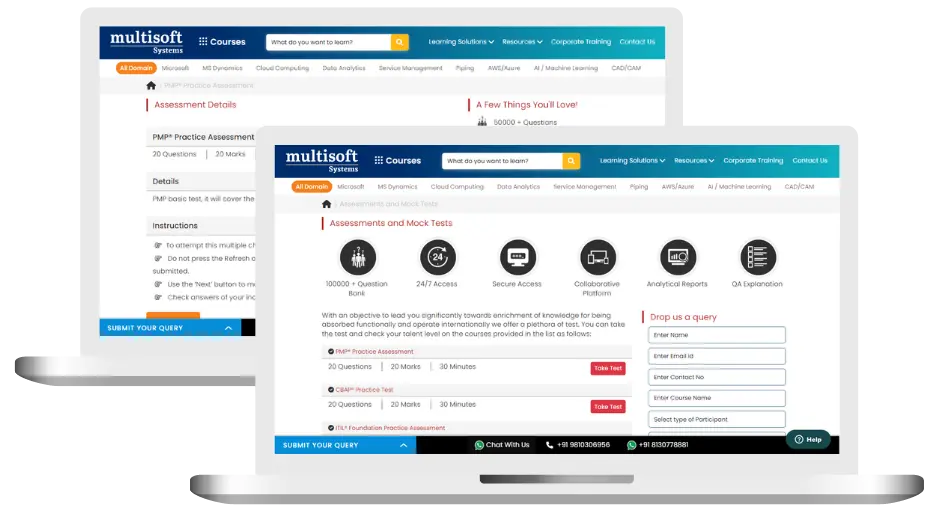
API 579-1/ASME FFS-1 Fitness-For-Service Training (MCQ) Assessment
This assessment tests understanding of course content through MCQ and short answers, analytical thinking, problem-solving abilities, and effective communication of ideas. Some Multisoft Assessment Features :
- User-friendly interface for easy navigation
- Secure login and authentication measures to protect data
- Automated scoring and grading to save time
- Time limits and countdown timers to manage duration.
API 579-1/ASME FFS-1 Fitness-For-Service Corporate Training
Employee training and development programs are essential to the success of businesses worldwide. With our best-in-class corporate trainings you can enhance employee productivity and increase efficiency of your organization. Created by global subject matter experts, we offer highest quality content that are tailored to match your company’s learning goals and budget.
Global Clients



Customized Training
Be it schedule, duration or course material, you can entirely customize the trainings depending on the learning requirements
Expert
Mentors
Be it schedule, duration or course material, you can entirely customize the trainings depending on the learning requirements
360º Learning Solution
Be it schedule, duration or course material, you can entirely customize the trainings depending on the learning requirements
Learning Assessment
Be it schedule, duration or course material, you can entirely customize the trainings depending on the learning requirements
Why API 579-1/ASME FFS-1 Fitness-For-Service Training for Your Professional Growth
Strengthen your professional capabilities with practical learning, industry-relevant knowledge, and skills applicable to real-world business and technology environments.
Industry-Relevant Skills
Gain knowledge aligned with current industry practices, technologies, processes, and professional requirements.
Practical Learning
Understand concepts through practical scenarios, instructor-led discussions, exercises, and use cases.
Enhanced Professional Capability
Strengthen your ability to work confidently with relevant tools, workflows, platforms, and business processes.
Broader Career Opportunities
Add valuable capabilities to your profile and explore opportunities across relevant roles, projects, and industries.
Adapt to Changing Technologies
Stay familiar with evolving technologies, methodologies, and practices shaping modern enterprise environments.
Professional Recognition
Demonstrate your training achievement with a course completion certificate from Multisoft Systems.
 Zoom-in
Certification Training Achievements: Recognizing Professional Expertise
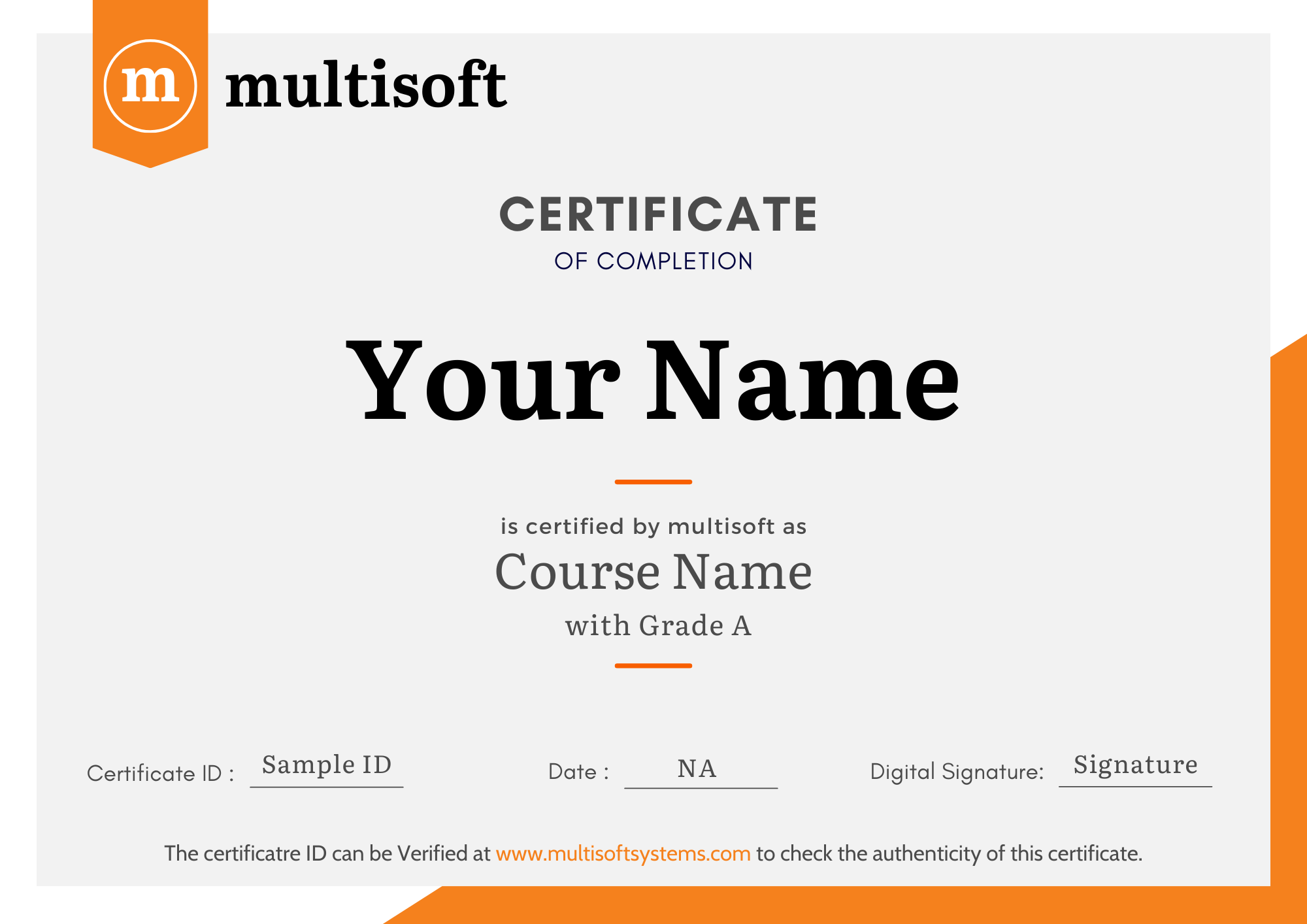
Multisoft Systems is the “one-top learning platform” for everyone. Get trained with certified industry experts and receive a globally-recognized training certificate. Some Multisoft Training Certificate Features :
- Globally recognized certificate
- Course ID & Course Name
- Certificate with Date of Issuance
- Name and Digital Signature of the Awardee
Trending Courses
Why Learners Choose Multisoft Systems
Compare key training features and see how Multisoft Systems focuses on structured learning, practical understanding, and learner support.
Training Features That Matter
Evaluate the learning experience across important areas before selecting a training program.
Instructor-Led Learning
Structured sessions guided by experienced trainers.
Practical Learning
Hands-on exposure that supports concept understanding.
Flexible Learning Options
Learning formats designed around different schedules.
Learner Support
Assistance throughout the training journey.
Learning Resources
Resources that support revision and continued learning.
Training Certificate
Recognition after successful course completion.
Choose Training That Goes Beyond Theory
Multisoft Systems combines guided learning, practical exposure, flexible delivery, learner support, and structured resources to create a more complete training experience.
ServiceNow ITOM Training: Skills, Benefits, and Career Opportunities
Modern businesses rely on IT infrastructure to support applications, digital... Read Article
SAP Hybris Training Functional & Developer: Skills, Modules, and Career Opportunities
SAP Hybris is associated with digital commerce solutions that help... Read Article
SAP Hybris Cloud for Customer: Project Implementation, Skills, and Career Guide
Implementing a customer relationship management platform involves much more than... Read Article
SAP Hybris Cloud for Service Training: Benefits, Skills, and Career Opportunities
Customer service has become an important part of modern business... Read ArticleAPI 579-1/ASME FFS-1 Fitness-For-Service Training Trainer Profile
11+ Years Experienced
Our API 579-1/ASME FFS-1 Fitness-For-Service Training Corporate & Certification Program trainers bring 13+ years of proven industry expertise, delivering practical insights aligned with real project environments.
Trained 3299+ Professionals
Our expert trainers have successfully trained 3350+ professionals through structured, real-time training programs designed for industry readiness and career growth.
Certified Experts & Real-Time Project Learning
Build strong practical skills through live project-based training sessions led by certified industry experts with real-world experience.
Hands-on Learning Approach
Gain practical exposure through real-time scenarios, industry case studies, and hands-on assignments that simulate actual project challenges.
Certification Training Guidance
Receive expert support to prepare effectively, practice strategically, and confidently achieve globally recognized certification success.
Customized Training Delivery
Flexible training approach tailored to individual learning goals, skill levels, and evolving industry requirements for maximum effectiveness.
API 579-1/ASME FFS-1 Fitness-For-Service Training FAQ's
The training helps professionals learn how to evaluate damaged pressure equipment and determine whether it can safely continue operating. It provides standardized assessment methods to analyze flaws, estimate remaining life, and support repair or replacement decisions, ensuring safety, reliability, and compliance with industry codes.
What Attendees are Saying
Our clients love working with us! They appreciate our expertise, excellent communication, and exceptional results. Trustworthy partners for business success.
Share Feedback