GCP-Google Cloud Certified Professional Cloud Architect Training

Download Course Brochure

Instructor-Led Online Training Parameters

Course Highlights

  • Instructor-led Online Training
  • Access to the recorded sessions
  • Certified & Experienced Trainers
  • Course Completion Certificate
  • Digital Learning Material
  • 24x7 After Training Support

GCP-Google Cloud Certified Professional Cloud Architect Training Course Overview

Developed by Google, Google Cloud consists of various public cloud computing services, and provides businesses with cloud management and cloud management services. It helps businesses with hosted services for storage and application development. Plus, Google Cloud is facilitating the digital transformation by offering world-class infrastructure to the business groups.We, Multisoft Systems, have a team of Google certified trainers and providing the Google Cloud Architect Certification Training Course. Over the years, this course has turned into one of the most popular certification courses related to the Google Cloud Platform. It aims in imparting skills required to design and plan cloud solution architecture, ensure operations reliability, and optimize technical and business processes.Upon the completion of this course, the candidates will be able to:

  • Design, plan, and implement cloud architecture
  • Finalize the designs for security and compliance
  • Maintain authenticity of solutions and operations
  • Manage and prepare a cloud solution infrastructure
  • Analyze and streamline business operations
Target Audience
  • DevOps Engineers
  • Cloud Solutions Architects
  • Professionals having experience in using the Google Cloud Platform
Prerequisites
  • Professionals should have a basic understanding of IT Service Management Prior IT experience will be an added advantage

Instructor-led Training Live Online Classes

Suitable batches for you

Dec, 2025 Weekdays Mon-Fri Enquire Now
Weekend Sat-Sun Enquire Now
Jan, 2026 Weekdays Mon-Fri Enquire Now
Weekend Sat-Sun Enquire Now

Share details to upskills your team


Build Your Own Customize Schedule


Course Objective

  • Design, plan, and implement cloud architecture
  • Finalize the designs for security and compliance
  • Maintain authenticity of solutions and operations
  • Manage and prepare a cloud solution infrastructure
  • Analyze and streamline business operations

Course Prerequisite

To get the most value from this training, learners should have:

  • Basic understanding of cloud computing concepts
  • Familiarity with networking fundamentals (VPCs, subnets, firewalls)
  • Working knowledge of Linux or system administration
  • Basic understanding of application development or IT infrastructure
  • Prior experience with any cloud platform (AWS, Azure, or GCP) is beneficial but not mandatory

Course Target Audience

By the end of this training, learners will be able to:

  • Design scalable, reliable, and secure cloud architectures on GCP
  • Choose appropriate Google Cloud services for compute, storage, networking, and databases
  • Architect solutions that meet business, security, and compliance requirements
  • Implement cost-optimized and high-availability cloud solutions
  • Manage deployments, monitoring, and performance optimization on GCP
  • Prepare confidently for the Google Cloud Professional Architect certification exam

GCP-Google Cloud Certified Professional Cloud Architect Training Course curriculum

Course Content

1.1 Designing a solution infrastructure that meets business requirements. Considerations include:

  •  Business use cases and product strategy
  •  Cost optimization
  •  Supporting the application design
  •  Integration with external systems
  •  Movement of data
  •  Design decision trade-offs
  •  Build, buy, modify, or deprecate
  •  Success measurements (e.g., key performance indicators [KPI], return on investment [ROI], metrics)
  •  Compliance and observability

1.2 Designing a solution infrastructure that meets technical requirements. Considerations include:

  •  High availability and failover design
  •  Elasticity of cloud resources with respect to quotas and limits
  •  Scalability to meet growth requirements
  •  Performance and latency

1.3 Designing network, storage, and compute resources. Considerations include:

  •  Integration with on-premises/multicloud environments
  •  Cloud-native networking (VPC, peering, firewalls, container networking)
  •  Choosing data processing technologies
  •  Choosing appropriate storage types (e.g., object, file, databases)
  •  Choosing compute resources (e.g., preemptible, custom machine type, specialized workload)
  •  Mapping compute needs to platform products

1.4 Creating a migration plan (i.e., documents and architectural diagrams). Considerations include:

  •  Integrating solutions with existing systems
  •  Migrating systems and data to support the solution
  •  Software license mapping
  •  Network planning
  •  Testing and proofs of concept
  •  Dependency management planning

1.5 Envisioning future solution improvements. Considerations include:

  •  Cloud and technology improvements
  •  Evolution of business needs
  •  Evangelism and advocacy

Download Curriculum DOWNLOAD CURRICULUM

2.1 Configuring network topologies. Considerations include:

  •  Extending to on-premises environments (hybrid networking)
  •  Extending to a multicloud environment that may include Google Cloud to Google Cloud communication
  •  Security protection (e.g. intrusion protection, access control, firewalls)

2.2 Configuring individual storage systems. Considerations include:

  •  Data storage allocation
  •  Data processing/compute provisioning
  •  Security and access management
  •  Network configuration for data transfer and latency
  •  Data retention and data life cycle management
  •  Data growth planning

2.3 Configuring compute systems. Considerations include:

  •  Compute resource provisioning
  •  Compute volatility configuration (preemptible vs. standard)
  •  Network configuration for compute resources (Google Compute Engine, Google Kubernetes Engine, serverless networking)
  •  Infrastructure orchestration, resource configuration, and patch management
  •  Container orchestration

Download Curriculum DOWNLOAD CURRICULUM

3.1 Designing for security. Considerations include:

  •  Identity and access management (IAM)
  •  Resource hierarchy (organizations, folders, projects)
  •  Data security (key management, encryption, secret management)
  •  Separation of duties (SoD)
  •  Security controls (e.g., auditing, VPC Service Controls, context aware access, organization policy)
  •  Managing customer-managed encryption keys with Cloud Key Management Service
  •  Remote access

3.2 Designing for compliance. Considerations include:

  •  Legislation (e.g., health record privacy, children’s privacy, data privacy, and ownership)
  •  Commercial (e.g., sensitive data such as credit card information handling, personally identifiable information [PII])
  •  Industry certifications (e.g., SOC 2)
  •  Audits (including logs)

Download Curriculum DOWNLOAD CURRICULUM

4.1 Analyzing and defining technical processes. Considerations include:

  •  Software development life cycle (SDLC)
  •  Continuous integration / continuous deployment
  •  Troubleshooting / root cause analysis best practices
  •  Testing and validation of software and infrastructure
  •  Service catalog and provisioning
  •  Business continuity and disaster recovery

4.2 Analyzing and defining business processes. Considerations include:

  •  Stakeholder management (e.g. influencing and facilitation)
  •  Change management
  •  Team assessment / skills readiness
  •  Decision-making processes
  •  Customer success management
  •  Cost optimization / resource optimization (capex / opex)

4.3 Developing procedures to ensure reliability of solutions in production (e.g., chaos engineering, penetration testing)


Download Curriculum DOWNLOAD CURRICULUM

5.1 Advising development/operation teams to ensure successful deployment of the solution. Considerations include:

  •  Application development
  •  API best practices
  •  Testing frameworks (load/unit/integration)
  •  Data and system migration and management tooling

5.2 Interacting with Google Cloud programmatically. Considerations include:

  •  Google Cloud Shell
  •  Google Cloud SDK (gcloud, gsutil and bq)
  •  Cloud Emulators (e.g. Cloud Bigtable, Datastore, Spanner, Pub/Sub, Firestore)

Download Curriculum DOWNLOAD CURRICULUM

6.1 Monitoring/logging/profiling/alerting solution

6.2 Deployment and release management

6.3 Assisting with the support of deployed solutions

6.4 Evaluating quality control measures


Download Curriculum DOWNLOAD CURRICULUM
video-img

Request for Enquiry

assessment_img

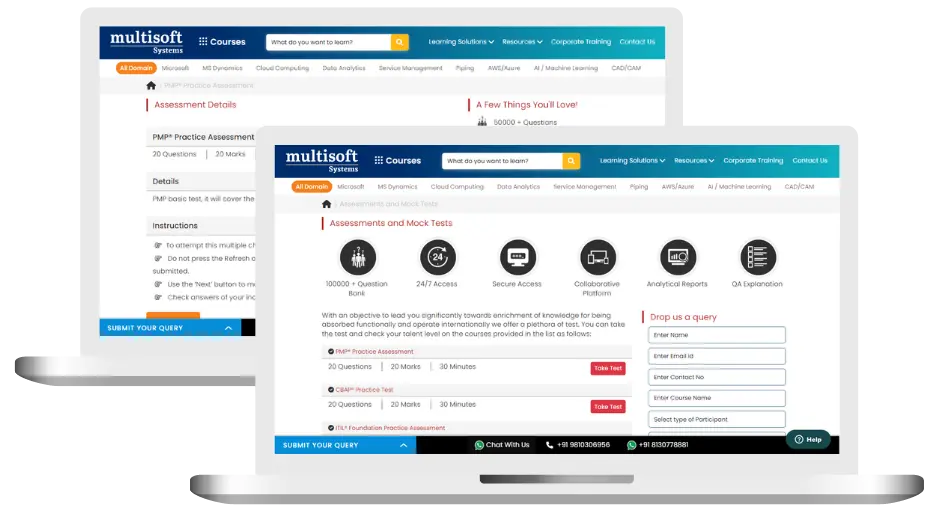
Free GCP Architect Training Assessment

This assessment tests understanding of course content through MCQ and short answers, analytical thinking, problem-solving abilities, and effective communication of ideas. Some Multisoft Assessment Features :

  • User-friendly interface for easy navigation
  • Secure login and authentication measures to protect data
  • Automated scoring and grading to save time
  • Time limits and countdown timers to manage duration.
Try It Now

GCP Architect Corporate Training

Employee training and development programs are essential to the success of businesses worldwide. With our best-in-class corporate trainings you can enhance employee productivity and increase efficiency of your organization. Created by global subject matter experts, we offer highest quality content that are tailored to match your company’s learning goals and budget.


500+
Global Clients
4.5 Client Satisfaction
Explore More

Customized Training

Be it schedule, duration or course material, you can entirely customize the trainings depending on the learning requirements
Expert
Mentors

Be it schedule, duration or course material, you can entirely customize the trainings depending on the learning requirements

360º Learning Solution

Be it schedule, duration or course material, you can entirely customize the trainings depending on the learning requirements

Learning Assessment

Be it schedule, duration or course material, you can entirely customize the trainings depending on the learning requirements

Certification Training Achievements: Recognizing Professional Expertise

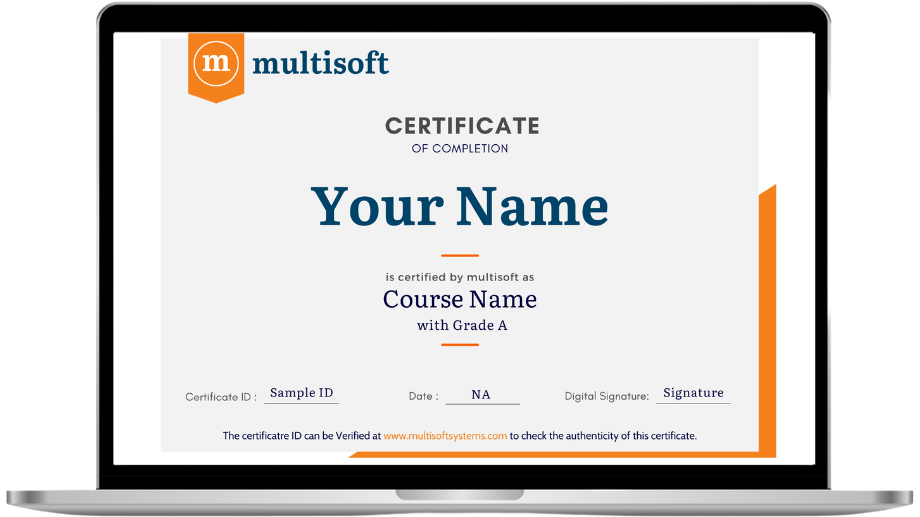
Multisoft Systems is the “one-top learning platform” for everyone. Get trained with certified industry experts and receive a globally-recognized training certificate. Some Multisoft Training Certificate Features :

  • Globally recognized certificate
  • Course ID & Course Name
  • Certificate with Date of Issuance
  • Name and Digital Signature of the Awardee
Get Sample Certificate

What Attendees are Saying

Our clients love working with us! They appreciate our expertise, excellent communication, and exceptional results. Trustworthy partners for business success.

Share Feedback
  WhatsApp Chat

+91-9810-306-956

Available 24x7 for your queries