Databricks Mosaic AI Training Online Certification Course
Accelerate your AI career with Databricks Mosaic AI Training by Multisoft Systems. Gain hands-on experience with generative AI, RAG, vector search, AI agents, MLflow, and model serving through expert-led online sessions. Learn to create enterprise-ready AI solutions and apply Mosaic AI capabilities to real-world business scenarios.
 1K+ Reviews
Instructor-Led Training Parameters
Course Highlights
- Instructor-led Online Training
- Project Based Learning
- Certified & Experienced Trainers
- Course Completion Certificate
- Customized Learning Schedule
- Doubt-Clearing Sessions
Databricks Mosaic AI Training Online Certification Course Course Overview
Databricks Mosaic AI Training by Multisoft Systems is designed for professionals who want to understand how artificial intelligence, machine learning, and generative AI applications can be created and managed within the Databricks ecosystem. The course introduces the Mosaic AI environment and progresses through model experimentation, foundation models, MLflow, prompt engineering, model serving, vector search, and enterprise AI application workflows.
Participants explore how large language models can be integrated with organizational data to create context-aware AI solutions. The training covers embeddings, vector-based retrieval, Retrieval-Augmented Generation (RAG), model endpoints, AI agents, evaluation techniques, and approaches for improving the reliability and relevance of AI-generated responses.
The course also addresses the operational side of enterprise AI, including model lifecycle management, monitoring, governance, security considerations, and production deployment. Practical exercises and application-oriented scenarios help participants understand how Mosaic AI capabilities can be combined to support scalable machine learning, generative AI, and agent-based solutions.
Instructor-led Training Live Online Classes
Suitable batches for you
| Oct, 2026 | Weekdays | Mon-Fri | Enquire Now |
| Weekend | Sat-Sun | Enquire Now | |
| Nov, 2026 | Weekdays | Mon-Fri | Enquire Now |
| Weekend | Sat-Sun | Enquire Now |
Share details to upskills your team
Enquire for Self-Paced Learning
Share your details and our training advisor will connect with you regarding self-paced learning options.
Databricks Mosaic AI Training Online Certification Course Course curriculum
Curriculum Designed by Experts
Databricks Mosaic AI Training by Multisoft Systems is designed for professionals who want to understand how artificial intelligence, machine learning, and generative AI applications can be created and managed within the Databricks ecosystem. The course introduces the Mosaic AI environment and progresses through model experimentation, foundation models, MLflow, prompt engineering, model serving, vector search, and enterprise AI application workflows.
Participants explore how large language models can be integrated with organizational data to create context-aware AI solutions. The training covers embeddings, vector-based retrieval, Retrieval-Augmented Generation (RAG), model endpoints, AI agents, evaluation techniques, and approaches for improving the reliability and relevance of AI-generated responses.
The course also addresses the operational side of enterprise AI, including model lifecycle management, monitoring, governance, security considerations, and production deployment. Practical exercises and application-oriented scenarios help participants understand how Mosaic AI capabilities can be combined to support scalable machine learning, generative AI, and agent-based solutions.
- Understand the architecture, components, and capabilities of Databricks Mosaic AI.
- Work with foundation models and Large Language Models (LLMs) for enterprise AI applications.
- Apply prompt engineering techniques to improve the relevance and consistency of AI-generated responses.
- Use MLflow for experiment tracking, model management, and AI lifecycle workflows.
- Configure and use Mosaic AI Model Serving for real-time inference.
- Work with embeddings and vector search for semantic information retrieval.
- Design Retrieval-Augmented Generation (RAG) applications using enterprise data.
- Create AI agent workflows that interact with data, models, and tools.
- Evaluate GenAI applications for response quality, relevance, and groundedness.
- Understand model customization and fine-tuning approaches for specific business requirements.
- Apply governance, access control, security, and responsible AI practices.
- Implement end-to-end AI workflows from data preparation and experimentation to deployment and monitoring.
Course Prerequisite
- AI and Machine Learning Engineers
- Generative AI Engineers and Developers
- Data Scientists
- Data Engineers
- Databricks Developers and Professionals
- ML Engineers and MLOps Professionals
- AI Application Developers
- Cloud and Data Platform Engineers
- Solution Architects and AI Architects
- Software developers working with LLM-based applications
- Technical consultants interested in enterprise AI solutions
- Professionals planning to transition into generative AI and Databricks AI roles
Course Target Audience
- AI and Machine Learning Engineers
- Generative AI Engineers and Developers
- Data Scientists
- Data Engineers
- Databricks Developers and Professionals
- ML Engineers and MLOps Professionals
- AI Application Developers
- Cloud and Data Platform Engineers
- Solution Architects and AI Architects
- Software developers working with LLM-based applications
- Technical consultants interested in enterprise AI solutions
- Professionals planning to transition into generative AI and Databricks AI roles
Course Content
- Overview of Databricks Data Intelligence Platform
- Introduction to Mosaic AI
- Mosaic AI ecosystem and capabilities
- Generative AI and machine learning use cases
- Understanding the AI application lifecycle
- Foundation models and enterprise AI
- Mosaic AI development architecture
- Common enterprise implementation scenarios
 DOWNLOAD CURRICULUM
- Lakehouse architecture fundamentals
- Databricks workspace overview
- Compute resources for AI workloads
- Notebooks and development environments
- Working with data for AI applications
- Delta Lake fundamentals
- Unity Catalog overview
- Data preparation for machine learning
- Managing AI development assets
DOWNLOAD CURRICULUM
- Mosaic AI development components
- AI application development workflow
- Working with notebooks and repositories
- Model development environments
- Managing experiments and artifacts
- Connecting data with AI workloads
- Development-to-production workflow
- Collaborative AI development practices
DOWNLOAD CURRICULUM
- Machine learning workflow in Databricks
- Preparing training datasets
- Feature engineering concepts
- Model training workflows
- Training and validation datasets
- Model performance metrics
- Hyperparameter experimentation
- Comparing model performance
- Managing machine learning experiments
- Reproducible ML workflows
DOWNLOAD CURRICULUM
- Introduction to MLflow
- MLflow tracking concepts
- Logging parameters and metrics
- Tracking model artifacts
- Comparing experiment runs
- Model packaging
- Model registration concepts
- Managing model versions
- Model lifecycle workflows
- MLflow integration with Mosaic AI
- Production model management considerations
DOWNLOAD CURRICULUM
- Introduction to foundation models
- Understanding Large Language Models
- Transformer and token concepts
- Foundation Model APIs
- Selecting models for AI applications
- Open and proprietary model considerations
- Context windows and token management
- Model parameters and inference settings
- Working with pretrained models
- Enterprise LLM use cases
- Cost, latency, and performance considerations
DOWNLOAD CURRICULUM
- Prompt engineering fundamentals
- System and user prompts
- Prompt templates
- Zero-shot and few-shot prompting
- Context management
- Structured prompting techniques
- Controlling model responses
- Prompt iteration and testing
- Managing prompt variables
- Structured output generation
- Handling hallucinations and irrelevant responses
- Designing prompts for enterprise applications
DOWNLOAD CURRICULUM
- Introduction to model serving
- Serving machine learning and generative AI models
- Creating model serving endpoints
- Endpoint configuration
- Querying serving endpoints
- Real-time model inference
- Foundation model endpoints
- Custom model serving
- Endpoint authentication and access
- Performance and scaling considerations
- Monitoring model endpoints
- Managing production inference workloads
DOWNLOAD CURRICULUM
- Understanding embeddings
- Vector representation of enterprise data
- Semantic search concepts
- Introduction to Mosaic AI Vector Search
- Vector indexes
- Preparing source data
- Generating embeddings
- Creating and managing vector search indexes
- Similarity search
- Metadata filtering
- Querying vector indexes
- Integrating Vector Search with LLM Applications
- Vector search performance considerations
DOWNLOAD CURRICULUM
- Introduction to RAG architecture
- Limitations of standalone LLMs
- RAG application workflow
- Document ingestion
- Data preprocessing
- Document chunking strategies
- Embedding generation
- Vector indexing
- Retrieval techniques
- Context construction
- Combining retrieved data with prompts
- LLM response generation
- Improving retrieval relevance
- RAG evaluation
- Handling enterprise knowledge sources
- Building an end-to-end RAG application
DOWNLOAD CURRICULUM
- Introduction to AI agents
- Understanding agentic AI workflows
- Mosaic AI Agent Framework concepts
- Components of an AI agent
- LLM reasoning and tool usage
- Connecting agents to enterprise data
- Retrieval within agent workflows
- Tool and function integration
- Designing multi-step AI workflows
- Managing agent context
- Agent responses and structured outputs
- Building knowledge-based agents
- Testing agent behavior
- Agent deployment considerations
DOWNLOAD CURRICULUM
- Importance of GenAI evaluation
- AI quality dimensions
- Evaluating LLM responses
- Response correctness and relevance
- Groundedness concepts
- Retrieval quality assessment
- Evaluation datasets
- Automated evaluation workflows
- Human evaluation considerations
- Comparing application versions
- Identifying hallucinations
- Tracking AI application quality
- Production monitoring concepts
- Continuous improvement of GenAI applications
DOWNLOAD CURRICULUM
- Understanding model customization
- Prompt engineering vs. fine-tuning
- Preparing training datasets
- Data quality considerations
- Fine-tuning concepts
- Model training workflow
- Evaluating customized models
- Comparing base and customized models
- Model registration and management
- Serving customized models
- Performance and cost considerations
- Selecting the appropriate customization strategy
DOWNLOAD CURRICULUM
- Enterprise AI governance concepts
- Unity Catalog for AI governance
- Access control and permissions
- Managing models and AI assets
- Data governance for AI workloads
- Model lineage concepts
- Securing AI applications
- Protecting enterprise information
- Responsible AI considerations
- Managing production endpoints
- Monitoring AI workloads
- Cost and resource optimization
- Production lifecycle management
- Operational best practices
DOWNLOAD CURRICULUM
- Defining an enterprise AI use case
- Preparing organizational data
- Selecting a foundation model
- Designing the application architecture
- Creating embeddings
- Configuring Vector Search
- Building a RAG pipeline
- Prompt development and optimization
- Integrating AI agents where applicable
- Evaluating application responses
- Deploying through model serving
- Monitoring application performance
- Applying governance and security controls
- Troubleshooting common implementation issues
- End-to-end project review
- Enterprise implementation considerations
DOWNLOAD CURRICULUM
Request for Enquiry
Explore Course Resources
Strengthen your learning with useful resources designed to help you prepare, practice, and evaluate your understanding.
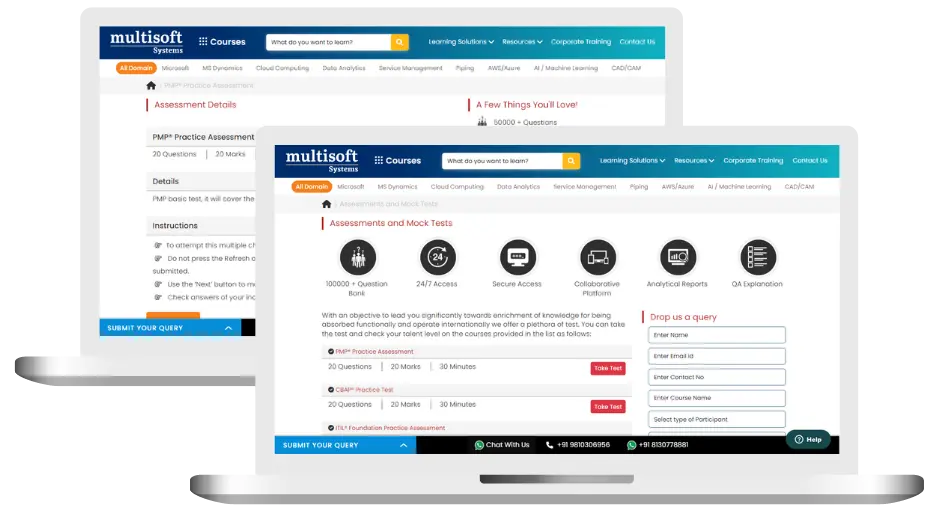
Databricks Mosaic AI Training (MCQ) Assessment
This assessment tests understanding of course content through MCQ and short answers, analytical thinking, problem-solving abilities, and effective communication of ideas. Some Multisoft Assessment Features :
- User-friendly interface for easy navigation
- Secure login and authentication measures to protect data
- Automated scoring and grading to save time
- Time limits and countdown timers to manage duration.
Databricks Mosaic AI Corporate Training
Employee training and development programs are essential to the success of businesses worldwide. With our best-in-class corporate trainings you can enhance employee productivity and increase efficiency of your organization. Created by global subject matter experts, we offer highest quality content that are tailored to match your company’s learning goals and budget.
Global Clients


Customized Training
Be it schedule, duration or course material, you can entirely customize the trainings depending on the learning requirements
Expert
Mentors
Be it schedule, duration or course material, you can entirely customize the trainings depending on the learning requirements
360º Learning Solution
Be it schedule, duration or course material, you can entirely customize the trainings depending on the learning requirements
Learning Assessment
Be it schedule, duration or course material, you can entirely customize the trainings depending on the learning requirements
Why Databricks Mosaic AI Training Online Certification Course for Your Professional Growth
Strengthen your professional capabilities with practical learning, industry-relevant knowledge, and skills applicable to real-world business and technology environments.
Industry-Relevant Skills
Gain knowledge aligned with current industry practices, technologies, processes, and professional requirements.
Practical Learning
Understand concepts through practical scenarios, instructor-led discussions, exercises, and use cases.
Enhanced Professional Capability
Strengthen your ability to work confidently with relevant tools, workflows, platforms, and business processes.
Broader Career Opportunities
Add valuable capabilities to your profile and explore opportunities across relevant roles, projects, and industries.
Adapt to Changing Technologies
Stay familiar with evolving technologies, methodologies, and practices shaping modern enterprise environments.
Professional Recognition
Demonstrate your training achievement with a course completion certificate from Multisoft Systems.
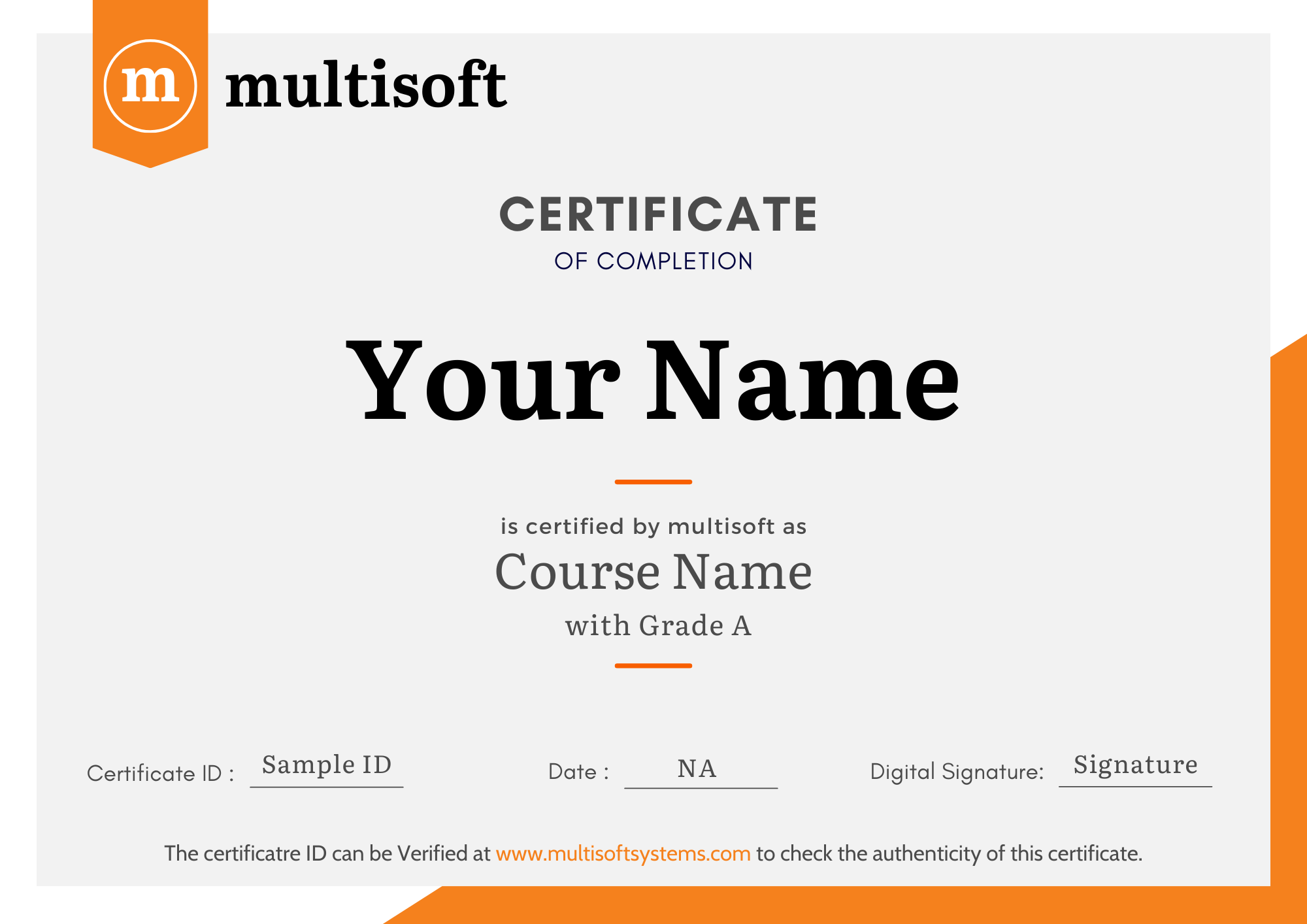
 Zoom-in
Certification Training Achievements: Recognizing Professional Expertise
Multisoft Systems is the “one-top learning platform” for everyone. Get trained with certified industry experts and receive a globally-recognized training certificate. Some Multisoft Training Certificate Features :
- Globally recognized certificate
- Course ID & Course Name
- Certificate with Date of Issuance
- Name and Digital Signature of the Awardee
Trending Courses
Why Learners Choose Multisoft Systems
Compare key training features and see how Multisoft Systems focuses on structured learning, practical understanding, and learner support.
Training Features That Matter
Evaluate the learning experience across important areas before selecting a training program.
Instructor-Led Learning
Structured sessions guided by experienced trainers.
Practical Learning
Hands-on exposure that supports concept understanding.
Flexible Learning Options
Learning formats designed around different schedules.
Learner Support
Assistance throughout the training journey.
Learning Resources
Resources that support revision and continued learning.
Training Certificate
Recognition after successful course completion.
Choose Training That Goes Beyond Theory
Multisoft Systems combines guided learning, practical exposure, flexible delivery, learner support, and structured resources to create a more complete training experience.
SAP Hybris Cloud for Customer: Project Implementation, Skills, and Career Guide
Implementing a customer relationship management platform involves much more than... Read Article
SAP Hybris Cloud for Service Training: Benefits, Skills, and Career Opportunities
Customer service has become an important part of modern business... Read Article
IBM AS400 Developer Training: Build Practical Skills for Enterprise Application Development
AS400, now associated with the IBM i operating environment on... Read Article
SAP Hybris Billing Explained: Processes, Skills, and Career Opportunities
Businesses are no longer limited to simple one-time sales. Subscription... Read ArticleDatabricks Mosaic AI Training Online Certification Course Trainer Profile
11+ Years Experienced
Our Databricks Mosaic AI Training Corporate & Certification Program trainers bring 13+ years of proven industry expertise, delivering practical insights aligned with real project environments.
Trained 3299+ Professionals
Our expert trainers have successfully trained 3350+ professionals through structured, real-time training programs designed for industry readiness and career growth.
Certified Experts & Real-Time Project Learning
Build strong practical skills through live project-based training sessions led by certified industry experts with real-world experience.
Hands-on Learning Approach
Gain practical exposure through real-time scenarios, industry case studies, and hands-on assignments that simulate actual project challenges.
Certification Training Guidance
Receive expert support to prepare effectively, practice strategically, and confidently achieve globally recognized certification success.
Customized Training Delivery
Flexible training approach tailored to individual learning goals, skill levels, and evolving industry requirements for maximum effectiveness.
Databricks Mosaic AI Training Online Certification Course FAQ's
Databricks Mosaic AI Training by Multisoft Systems is an instructor-led program focused on developing, deploying, evaluating, and managing machine learning and generative AI applications using the Databricks platform.
What Attendees are Saying
Our clients love working with us! They appreciate our expertise, excellent communication, and exceptional results. Trustworthy partners for business success.
Share Feedback